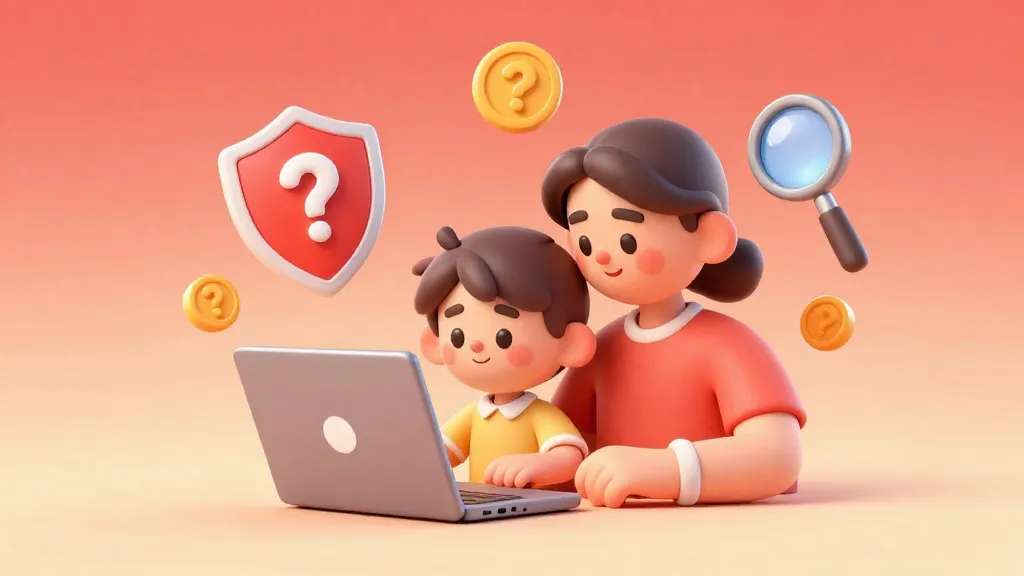
A message pops up: 'Congratulations! You've won 10,000 Robux! Click here to claim.' Your heart races. Free Robux! But within 60 seconds of clicking, the scammer has your Roblox password, your email, and maybe even your parent's credit card details.
Thousands of kids fall for scams like this every day. Cyber-criminals use deception to steal your personal information or digital currency. This guide will help you spot their tricks and keep your family's money safe.
Being a digital native means you are great at navigating the internet, but it also makes you a target. Scammers know that kids are often more trusting than adults. They also know that many kids have access to their parents' tablets, phones, and even credit card information through app stores.

A 2023 study found that nearly 1 in 4 children have been targeted by some form of online scam or phishing attempt. You are definitely not alone!
Scammers don't just want your pocket money: they want your accounts, your passwords, and your data. By learning the patterns they use, you can become the first line of defense for your family. It is not about being afraid: it is about being smart.
Why Scammers Target Kids
You might wonder why a scammer would bother with a kid. The truth is, kids are the perfect targets for social engineering. This is a fancy term for when someone manipulates you into giving away secrets or money. Scammers assume you have less experience spotting lies than an adult does.

It takes 20 years to build a reputation and five minutes to ruin it. If you think about that, you'll do things differently.
They also look for 'easy wins.' If they can trick you into downloading a fake game, they might gain access to your entire home Wi-Fi network. They are looking for the path of least resistance, and often, that starts with a tempting offer for a young person.
Common Scams in Your Digital World
Scammers don't send you emails about 'overdue taxes' because they know you don't pay them. Instead, they focus on the things you actually care about. Most scams targeting kids fall into a few specific categories that you likely see every single day.
- Gaming Scams: These are the most common. They promise free in-game currency like Robux, V-Bucks, or Minecoins. They often use 'generators' that look official but are actually designed to steal your login details.
- Fake Giveaways: You might see a post on social media from someone who looks like a famous influencer. They claim to be giving away expensive consoles or headsets, but you have to 'pay for shipping' first.
- Phishing Links: These are messages that look like they are from a friend or a platform like Discord. They might say, 'Check out this funny video of you!' or 'You've been banned, click here to appeal.'
- Fake Online Shops: These sites show popular sneakers or hoodies at prices that are 80% lower than anywhere else. They take your money, but the items never arrive.

Finn says:
"Wait, so even if a link comes from my best friend's account, it could still be a scammer? How does that work?"
Next time you see a link, hover your mouse over it (don't click!) to see the real web address. Does it match where the message says it is going? If not, it's a scam.
Spotting the Red Flags
Most scams follow a very similar recipe. Once you know the ingredients, they are much easier to see coming. These 'red flags' are your warning signs that something isn't right. If you see even one of these, you should pause and be extra careful.

Distrust and caution are the parents of security.
One of the biggest red flags is urgency. Scammers want you to act fast before you have time to think. They use phrases like 'Only 5 minutes left!' or 'First 10 people to click get the prize!' This pressure is a tactic to make you ignore your common sense.
- Too Good to be True: If someone is offering $100 worth of currency for free, ask yourself why. Nobody gives away valuable things to strangers for no reason.
- Requests for Personal Info: A real game or website will never ask for your password, your home address, or your parent's phone number through a random message.
- Bad Spelling and Grammar: Many scammers operate from different countries and use quick translation tools. If a 'professional' company has lots of typos, it is likely a fake.
- Unfamiliar Links: Check the URL. If you are on 'Roblox.com,' that is safe. If the link says 'Free-Robux-Now-123.net,' it is a scam.
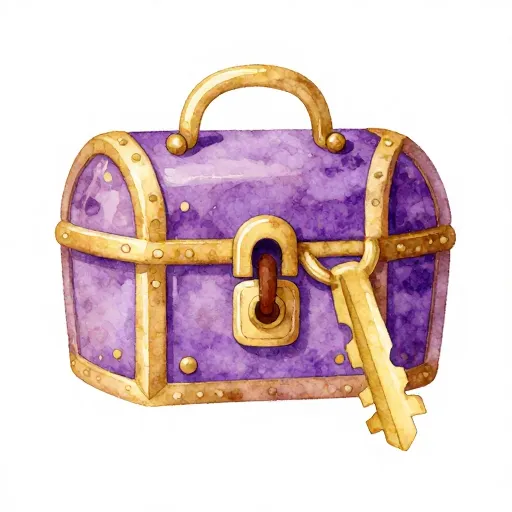
Imagine a stranger walking up to you on the street and saying, 'If you give me your house keys, I'll go inside and leave a pile of gold on your bed.' You would never say yes! An online scam asking for your password is the exact same thing.
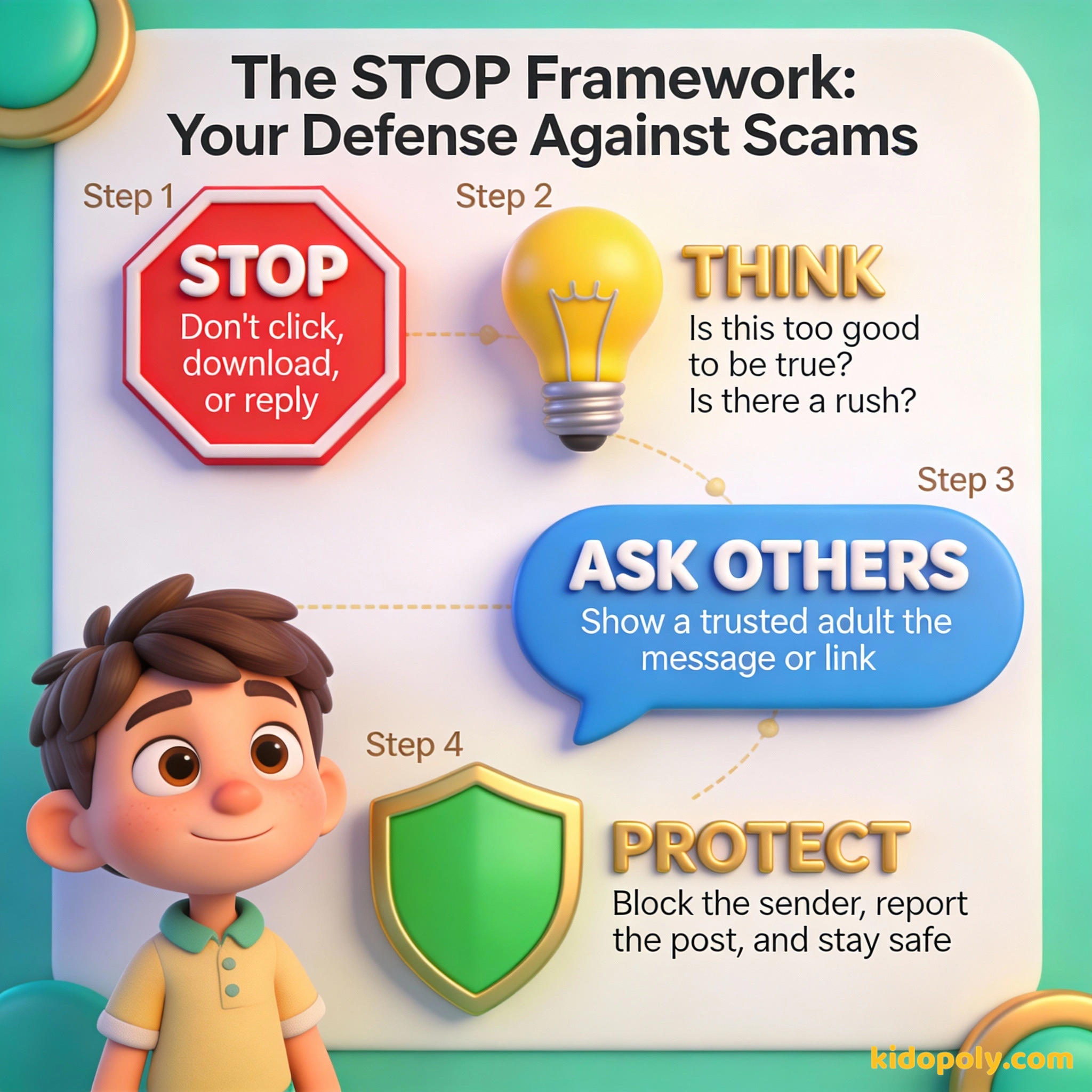
The STOP Framework
When you encounter something suspicious, you don't need to panic. You just need a plan. The STOP framework is a simple way to remember exactly what to do when you see a potential scam. It turns a scary moment into a series of logical steps.

Mira says:
"I once saw a 'free gift' post that wanted my home address. I asked my mom and we realized the account was a fake version of a real brand!"
What to Do if You Get Scammed
First, take a deep breath. Even the smartest adults in the world get scammed sometimes. Scammers are professional liars who spend all day practicing how to trick people. If you clicked a link or gave away information, the most important thing is what you do next.
The Cost of 'Free': Scam Offer: 5,000 Robux ($50 value) for 'Free' Requirement: Pay a $1 'verification fee' with a credit card Real Result: The scammer steals the $1 plus your card details to spend $500 elsewhere. Total Cost: $501 and a lost account.
Tell a trusted adult immediately. Do not try to hide it because you are embarrassed or afraid of getting in trouble. The faster an adult knows, the faster they can call the bank, change passwords, or secure your computer. You are not in trouble: you are the victim of a crime.

If it sounds too good to be true, it is.
Once you've told an adult, you should take technical steps. Change your passwords for any account that might be affected. If you can, turn on two-factor authentication (2FA). This is a second layer of security that makes it much harder for scammers to get into your accounts even if they have your password.
Finn says:
"So the 'Ask Others' part is the most important? I guess my parents would rather know now than find out when their credit card is blocked!"
Protecting Yourself for the Future
Staying safe doesn't mean you have to stop playing games or using the internet. It just means being a cautious traveler. Think of it like wearing a seatbelt: you don't expect to get in a car crash, but you wear it just in case.
I should never trust anything I see online and stay off the internet completely.
I can enjoy the internet as long as I stay alert, check my facts, and talk to my family.
Remember that your private information is valuable. Your name, your school, your birthday, and your passwords are all pieces of a puzzle that scammers try to put together. Keep those pieces safe, and you will be a much harder target to hit.
Something to Think About
If you saw a message from a 'famous YouTuber' offering you a free prize right now, what is the first red flag you would look for?
Think about how scammers try to use your excitement against you. There is no right or wrong answer, just think about your own 'scam-spotting' strategy.
Questions About Money & Society
Why do scammers want my gaming account?
Can I get my money back if I've been scammed?
Is it my fault if I clicked on a scam link?
You Are Now a Scam-Spotter
Knowledge is your best protection. Now that you know the red flags and the STOP framework, you can explore the digital world with confidence. Want to learn more about specific gaming tricks? Check out our guide on in-game currency scams next!
