
You want a new pair of trainers that cost £60, but you only get £5 a week pocket money. That means 12 weeks, which is about 3 months, of waiting.
Waiting three months for something you love can feel like forever. But when you turn that wish into a saving goal, you are not just waiting. You are using a financial framework to take control of your money and make your dreams happen.
Saving money without a plan is like trying to find a hidden treasure without a map. You might find a few coins here and there, but you probably won't find the big chest of gold. A saving goal is your personal map. It tells you exactly where you are going and how long it will take to get there.
When you set a goal, you turn boring coins into a future superpower. Instead of wondering where your money went, you decide exactly where it is going. It makes every pound feel more important because it is a piece of a bigger puzzle.

Someone is sitting in the shade today because someone planted a tree a long time ago.
The SMART Way to Set Goals
To make a goal work, it needs to be more than just a wish. Experts use a system called SMART goals to make sure they actually succeed. You can use this same system for your money. SMART stands for:
- Specific: What exactly do you want? (Example: A purple Nintendo Switch Lite, not just 'a game')
- Measurable: How much does it cost? (Example: £199.99)
- Achievable: Can you actually get this money? (Example: Saving pocket money and birthday cash)
- Relevant: Do you really want it? (Example: Something you will use every day)
- Time-bound: When do you want to have it? (Example: In 6 months for your summer holiday)

Finn says:
"So, if I just say 'I want to be rich,' that’s not a SMART goal? I need to pick a specific amount and a date?"
Using the SMART system means you have a clear target. If you just say "I want to save money," you don't know when you are finished. If you say "I want to save £20 for a new book by next month," you have a mission to complete.

Research shows that people who write down their goals and share them with a friend are 40 percent more likely to achieve them! Try telling your parents exactly what you are saving for.
Three Types of Saving Horizons
Not every goal takes the same amount of time. Some things you can buy after a few weeks, while others might take a whole year. We group these into three "horizons."
- Short-term goals (1 to 4 weeks): These are for small wins. Think of things like a new book, a cinema ticket, or a small toy. These keep you excited because you reach them quickly.
- Medium-term goals (1 to 6 months): These are the big ones. This might be a new video game, a pair of branded trainers, or a special Lego set.
- Long-term goals (6 months or more): These are for the massive items. Maybe you are saving for a bike, a tablet, or a trip to a theme park. These require the most patience but feel the best when you finally reach them.

Grab three jars or envelopes. Label them: 'Short Term' (1 month), 'Medium Term' (6 months), and 'Long Term' (1 year). When you get money, decide which goal needs it most!
The Savings Goal Calculator
How do you know if your goal is realistic? You use the magic of math! Before you start saving, you need to do a quick calculation. This tells you exactly how many weeks of saving you have ahead of you.
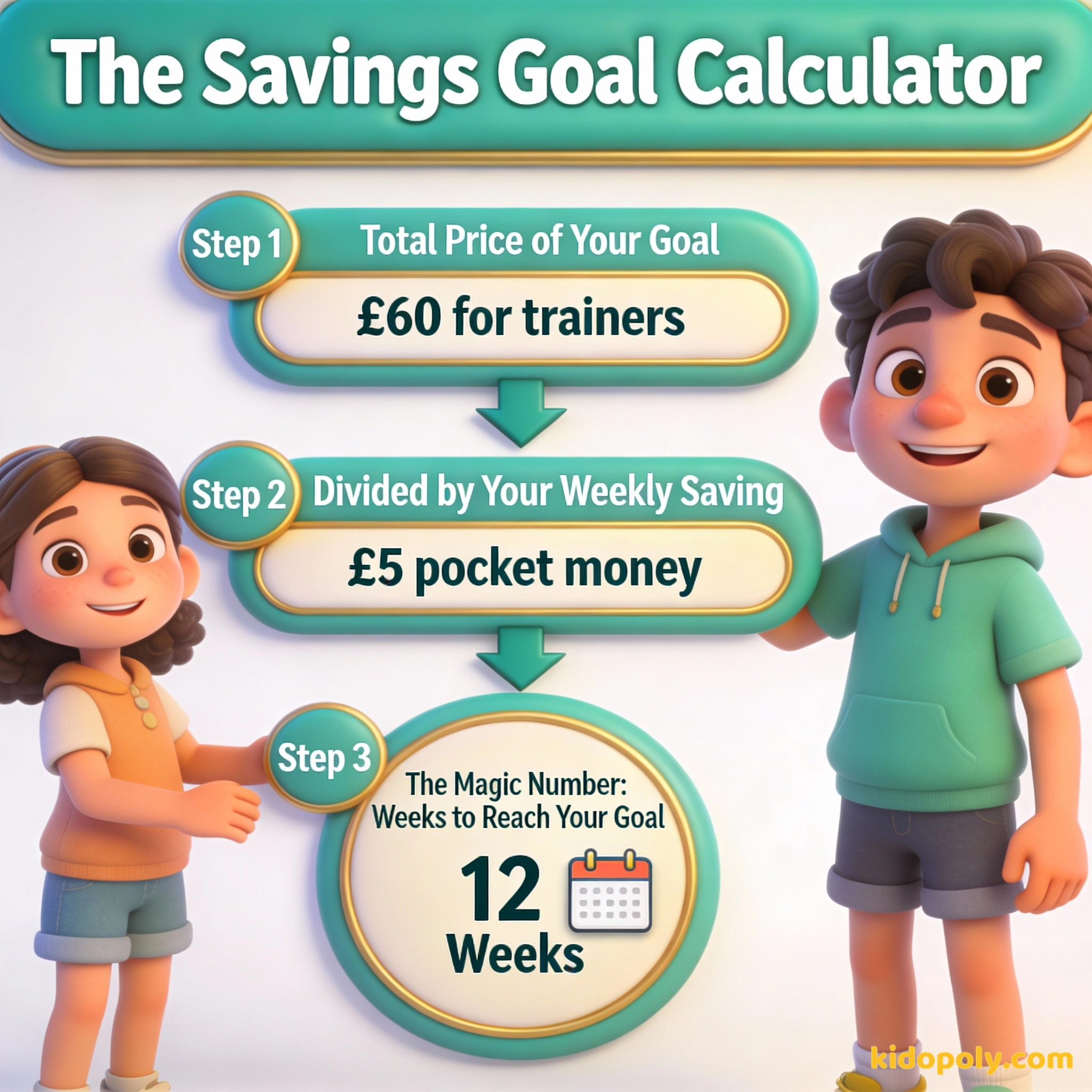
Let's look at some real-world examples. If you want a Squishmallow that costs £15 and you save £3 a week, you'll reach your goal in 5 weeks. If you want a gaming headset for £40 and save £5 a week, it will take 8 weeks. Seeing the number of weeks helps you decide if the goal is worth the wait.
The 'Wait Time' Formula: Cost of Item: £50 Your Weekly Savings: £5 Calculation: 50 ÷ 5 = 10 Time to Goal: 10 Weeks
Staying Motivated While You Wait
The hardest part of saving is the middle bit. The first week is exciting, and the last week is thrilling, but the weeks in between can feel slow. This is where your motivation tools come in.
One of the best ways to stay on track is to use a visual tracker. This is a drawing or a chart that you color in as you save. Seeing the bar go up or the jar fill up gives your brain a little reward. It proves that you are actually getting closer, even if it feels slow.

Mira says:
"Exactly! It’s like a loading bar in a video game. You wouldn't play if you couldn't see how much of the level is left, right?"
Another trick is to set milestones. If you are saving £100, give yourself a tiny celebration when you hit £25, £50, and £75. Maybe you get to pick the movie for family night or have your favorite dessert. It keeps the journey fun.

Beware of little expenses; a small leak will sink a great ship.
Where to Keep Your Goal Money
When you are saving for a specific goal, it helps to keep that money separate from your regular spending money. If all your cash is in one pile, it is very tempting to spend it on a chocolate bar or a small toy today. That is called opportunity cost, and it can reset your goal timer.
- Saving Jars: Clear jars are great because you can literally see the pile of money growing.
- Multiple Envelopes: You can have one envelope for your short-term goal and one for your long-term goal.
- Digital Pots: If you have a bank account, many apps let you create "pots" or "spaces" for different goals.
Focusing everything on one single goal. You get it faster, but you can't buy anything else while you wait.
Splitting your savings between 2 or 3 goals. It takes longer for each, but you get small wins along the way.
Linking your goals to where you keep them makes them feel real. If you want to learn more about how to manage your overall cash, check out our guide on creating your first budget. If you think a bank account might help you stay organized, explore savings accounts for kids.
Finn says:
"I like the idea of separate envelopes. It’s like my money has different jobs to do, and one job is 'Buy Finn a new bike!'"
Reaching the Finish Line
What happens when you finally have enough? First, celebrate! You worked hard and showed amazing discipline. Take a moment to be proud of yourself before you run to the shop. Reaching a saving goal is a huge achievement that many adults even struggle with.

A big part of financial freedom is having your heart and mind free from worry about the what-ifs of life.
Once you have bought your item, it's time to look ahead. You now have a proven system that works. Ask yourself: what's next? Most successful savers already have their next goal in mind before they finish their current one. It keeps the momentum going and helps you build a lifetime of good habits.

Imagine it is 3 months from now. You are walking into the shop with the money you saved. You pick up the item you've wanted for weeks. You don't have to ask anyone for the money because you earned it yourself. How does that feel?
Something to Think About
If you could only save for one thing for the rest of the year, would you pick one big expensive item or five smaller ones?
There is no right answer here! Some people love the thrill of small wins, while others love the pride of a huge achievement. Which type of saver are you?
Questions About Saving
What if I see something else I want while I'm saving?
How do I know if a price is good for my goal?
What if I have an emergency and need my savings?
Your Saving Adventure Starts Today
Now that you have the map and the compass, you are ready to start your journey. Why not find a piece of paper right now and write down your first SMART goal? For more tips on how to grow your money, head over to our page on why we save to see the big picture!
