Imagine sitting at a table with a single, fluffy marshmallow right in front of you. A scientist tells you that they have to leave the room for 15 minutes, and if the marshmallow is still there when they get back, they will give you a second one.
This famous test of delayed gratification shows how waiting for something better can change your life. In the world of money, this waiting is called savings, and it is the closest thing to a real-life superpower you can have.
Scientists once gave 4-year-olds a choice: eat one marshmallow now, or wait 15 minutes and get two. The kids who managed to wait didn't just get more marshmallows: years later, they were doing better in school, had better health, and were generally happier.
Saving money works exactly the same way. When you choose not to spend your pocket money on a small snack today, you are actually buying something much bigger for your future self. It is the art of waiting for the double-marshmallow moment.
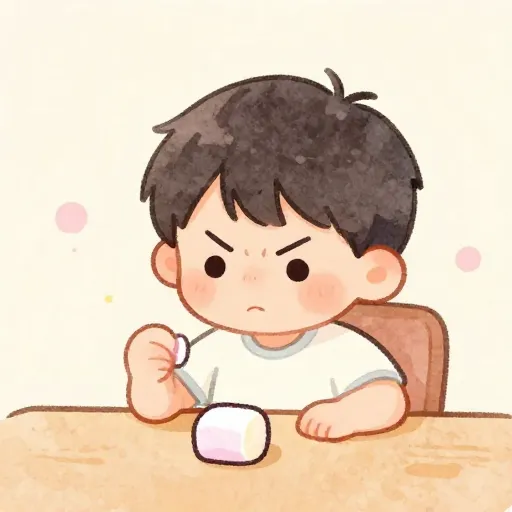
In the marshmallow experiment, children used all sorts of tricks to avoid eating the treat! Some covered their eyes, some sang songs, and some even tried to stroke the marshmallow like a pet to distract themselves.
Why Can't I Just Spend My Money Now?
It is tempting to spend money the second it hits your hand. Whether it is birthday cash or payment for chores, those coins feel like they are burning a hole in your pocket! You might see a cool pack of trading cards or a tasty treat and think, "Why not?"
Spending money now gives you a quick burst of fun, but that fun usually disappears quickly. If you spend every penny as soon as you get it, you are stuck in a cycle of having zero savings. This means you can only ever buy things that cost a tiny amount of money.
Do not save what is left after spending, but spend what is left after saving.
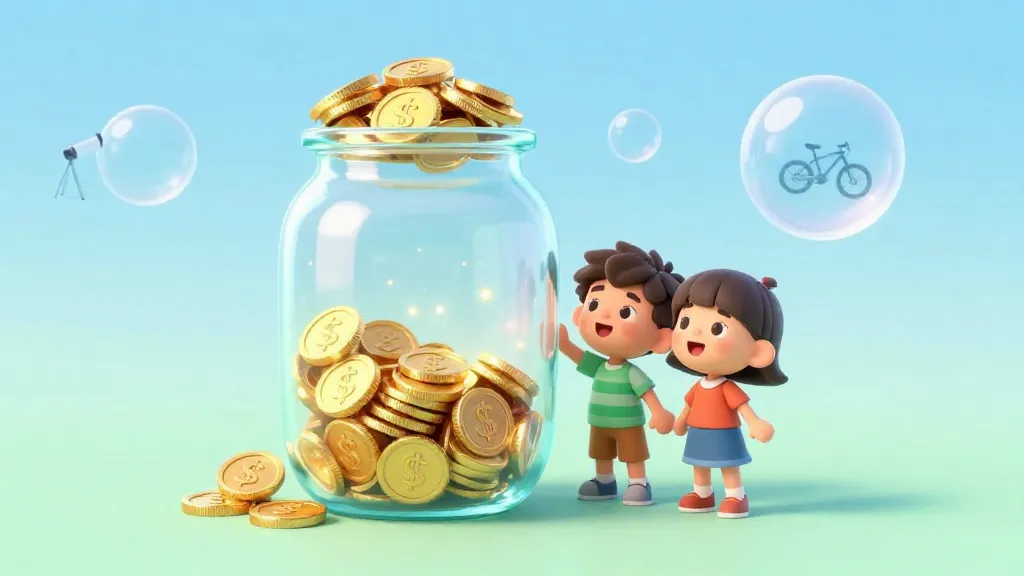
When you save, you are giving yourself the gift of choices. If you spend $5 every week on small toys that break, you will never have the $100 needed for that high-quality game console or the sleek skateboard you really want.

Finn says:
"But wait, if I save all my money for big things, when do I ever get to spend it on small stuff like ice cream?"
The Three Important Jobs of Your Savings
Saving isn't just about putting money in a jar and forgetting about it. Your saved money is actually working for you behind the scenes. Think of your savings like a team of helpers that perform three specific jobs: protection, reaching goals, and building wealth.
Job 1: The Safety Net (The Emergency Fund) Life is full of surprises, and not all of them are good. Maybe your favorite headphones snap, or you lose your soccer ball at the park. If you have no savings, you are stuck without those things until you can slowly earn the money back.
Imagine your bike tire costs $20 to fix. If you save just $2 a week: In 10 weeks, you have your safety net! Without that $2 a week, a broken tire means you are walking for a long, long time.
Job 2: The Big Wins (Saving Goals) Some of the best things in life cost more than a week's worth of pocket money. Saving allows you to achieve a saving goal, which is a specific thing you want to buy or do in the future. It turns "I wish I had that" into "I am getting that."

Job 3: Making Money Grow This is the most exciting job of all! When you keep your money in certain places, like a bank, the bank actually pays you for keeping it there. This extra money is called interest. Over time, your money can actually start making its own money.

Mira says:
"Think of it like a health bar in a video game, Finn. You don't want to use your potions on every tiny scratch. You save them for the big bosses or when you really need a boost!"
What Happens to People Who Never Save?
Imagine a person who earns $10 and spends $10 every single day. On Monday, they are fine. On Tuesday, they are fine. But on Wednesday, their bike tire pops.
Because they have zero savings, they can't afford the $15 for a new tube. Now they have to walk everywhere, which takes longer and makes them late. Because they are late, they miss out on a chance to earn more money. This is called being "money-stressed," and it isn't a fun place to be.
You get a small toy today, but it might break by tomorrow. You have $0 left for anything else.
You wait and put that money aside. Soon, you have enough for a high-quality item that lasts for years.
People who don't save are often forced to make choices they don't like. They might have to borrow money from others, which means they have to pay it back later with even more money! Saving just a little bit every time you get paid keeps you out of this trap.
A penny saved is a penny earned.
The Superpower of Financial Freedom
Ultimately, the biggest reason to save is financial freedom. This sounds like a big adult word, but for a kid, it means having the power to say "yes" to the things that truly matter to you.
When you have savings, you aren't just a passenger in your own life: you are the driver. You can decide to go on that special school trip, buy the birthday present your best friend will love, or even start your own small business.
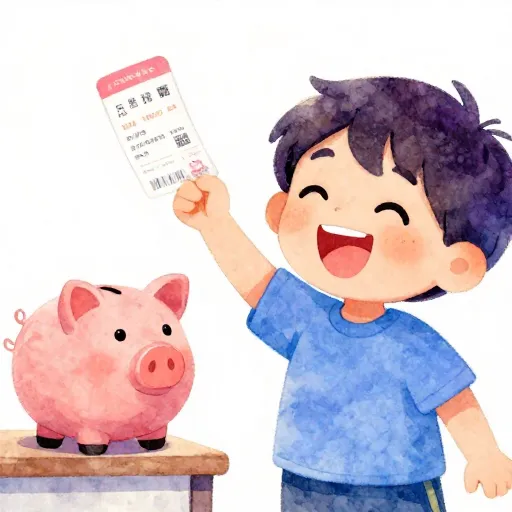
Imagine your favorite band is coming to town, but tickets are $50. Your friend, who never saves, can't go and feels sad. But because you saved a little bit every month, you check your jar and find $60! You have the freedom to say 'YES' to the concert and still have $10 left over.
Savings represent the work you have already done, stored up for a future time. It is like a battery that holds energy until you are ready to use it. The more you save, the more "power" your battery has to help you live the life you want.
Finn says:
"So saving isn't about saying 'no' to everything, it's about making sure I have enough 'yes' for the things that really count. That actually sounds pretty cool."
Think of Your Future Self
Every time you are about to spend money, take a second to think about the "Future You." Will the Future You be happy that you bought that candy bar that is gone in five minutes? Or would the Future You be happier being five dollars closer to that big, amazing goal?

It's not how much money you make. It's how much money you keep.
Saving isn't about being boring or saying "no" to fun. It is about saying "not yet" so you can say "WOW" later. By practicing this now, you are building a habit that will make you one of the smartest, most prepared people in the room as you grow up.
Next time you see something you want to buy, try the '24-Hour Rule.' Wait exactly one full day before buying it. If you still want it just as much tomorrow, it might be worth it. Often, you'll find you don't actually want it that much after all!
Something to Think About
If you could save up for one 'superpower' item or experience that would make your life more exciting, what would it be?
Think about what really matters to you. Is it a new skill, a cool gadget, or a trip somewhere? There is no right or wrong answer: saving is about your personal goals!
Questions About Saving
Is it okay to spend some of my money?
How much should a kid save?
What if I really need to buy something now?
Ready to Start Your Saving Adventure?
Now that you know WHY saving is such a superpower, you might be wondering how to actually get started. Whether you want to set a massive goal or just start your first safety net, the next step is deciding what you are saving for!
