YouTube Last updated: January 12, 2026

Best Science YouTube Channels for Kids

Fueling Tomorrow's Innovators with Fun Science.

Screen time transforms into STEM-powered discovery with this curated list. We cut through the noise to bring you only the channels where real science meets exceptional, curiosity-igniting delivery. These picks prioritize accuracy, jaw-dropping demonstrations, and a tone parents can trust, ensuring every view sparks a new question, not just passive consumption.

The List

1
Mark Rober poster

Mark Rober

2011 15-25 min Ages 9+

Mark Rober, a former NASA engineer, brings unparalleled production quality and real-world engineering challenges to the forefront. His elaborate builds, like glitter bombs or squirrel obstacle courses, perfectly mask deep dives into physics, mechanics, and problem-solving. It teaches kids that science is about building, testing, and seeing massive, exciting results—no dusty textbooks required. His passion is contagious and clearly inspires a generation of future engineers.

Watch if: your kid loves over-the-top projects and learning engineering principles through epic action.
2
SciShow Kids poster

SciShow Kids

2015 5-10 min Ages 5-9

This channel excels at directly addressing the 'why' questions kids constantly ask, featuring host Jessi and Squeaks the Robot Lab Rat. The content is perfectly paced for early elementary learners, focusing heavily on life science, earth science, and basic chemistry with vivid animations. It builds a foundational love for the scientific method through playful, short-form content aligned with educational standards.

Watch if: your younger elementary student needs simple, cheerful answers to their biggest everyday 'why' questions.
3
Veritasium poster

Veritasium

2010 15-30 min Ages 12+

Hosted by Dr. Derek Muller, Veritasium dives deep into counter-intuitive concepts, often starting by exploring public misconceptions before revealing the true science. This approach fosters critical thinking—a vital skill for any budding scientist. While the topics are complex (physics, perception), the masterful storytelling and real-world context make it engrossing for thoughtful older kids and teens.

Watch if: your tween or teen enjoys thoughtful investigations that challenge what they think they already know about science.
4
Kurzgesagt – In a Nutshell poster

Kurzgesagt – In a Nutshell

2013 10-15 min Ages 10+

Kurzgesagt uses mesmerizing, minimalist flat 3D animation and meticulous research to explain vast topics like space, biology, and philosophy. The presentation is aesthetically beautiful and rigorously fact-checked by experts, giving older kids a sophisticated, yet visually accessible, introduction to massive scientific concepts. It elevates science to an art form while maintaining scientific integrity.

Watch if: your child is captivated by the big picture: space, existential science, and complex systems explained beautifully.
5

Crash Course Kids

2014 4-5 min Ages 6-10

Coming from the *Crash Course* creators, this channel distills STEM subjects into fast, standards-matched videos perfect for the 3rd to 5th-grade sweet spot. The high energy and engaging hosts rapidly cover everything from earth science to basic engineering with humor. It’s excellent for reinforcing classroom lessons with a dynamic, fun format that avoids condescension.

Watch if: your elementary student needs quick, standards-aligned, high-energy lessons in diverse STEM fields.
6

SmarterEveryDay

2007 12-20 min Ages 10+

Aerospace engineer Destin Sandlin approaches science by asking simple questions and then relentlessly pursuing the answer through hands-on investigation, often involving unique technology like high-speed cameras. He models the scientific mindset of observation and experimentation perfectly. While some episodes might lean older, the core principle of exploring 'everyday science' is profoundly inspiring.

Watch if: your kid is starting to ask *how* things work using physics and engineering first-hand observation.
7

MinuteEarth

2013 5-7 min Ages 7+

A spin-off of MinutePhysics, MinuteEarth uses simple, stick-figure animations and a light touch of humor to explain earth sciences, ecology, and biology. The channel expertly synthesizes complex topics—like plate tectonics or biodiversity—into easily digestible formats, helping kids appreciate the interconnectedness of our planet.

Watch if: your family loves learning about geology, climate, and the natural world through clever, minimalist animation.
8

The Dr. Binocs Show

2013 5-10 min Ages 4-8

This channel, often featuring content shared with Peekaboo Kidz, presents factual science explanations in a highly narrative, character-driven format. Dr. Binocs answers specific questions about inventions, phenomena, and biology in a way that is supremely accessible for younger viewers. It’s excellent for introducing core scientific history and concepts through engaging storytelling.

Watch if: your youngest scientists prefer a fun, recurring character to guide them through basic science facts and history.
9

BrainPOP

1999 4-6 min Ages 7-14

A long-standing educational staple, BrainPOP delivers concise, animated movies featuring the characters Tim and Moby to explain core concepts across all STEM subjects. It’s reliable, classroom-trusted content that seamlessly integrates science with social studies and engineering, empowering students to take agency over their learning. Parents will appreciate the quality that has been refined for decades.

Watch if: you want trusted, school-quality content featuring animated characters that cover a broad curriculum scope.
10

Peekaboo Kidz

2011 5-10 min Ages 4-8

This channel offers bright, colorful, and simple explanations, often focusing on animals, nature, and basic physics in a very playful manner. It pairs well with Dr. Binocs content and is perfectly suited for sparking initial curiosity in preschoolers and early elementary ages. The visual style is immediately engaging for the youngest learners in your family.

Watch if: your little one needs bright, simple introductions to nature and basic scientific phenomena.
11

Physics Girl

2015 8-15 min Ages 11+

Dianna Cowern makes physics engaging, tackling complex topics like electromagnetism, optics, and quantum mechanics with infectious enthusiasm and creative, often large-scale, experiments. Her dynamic presence proves that science, especially physics, is exciting and accessible for older kids who are ready for a bit more depth without losing the 'fun' factor.

Watch if: your aspiring physicist needs a role model who tackles challenging concepts with creativity and high energy.
12
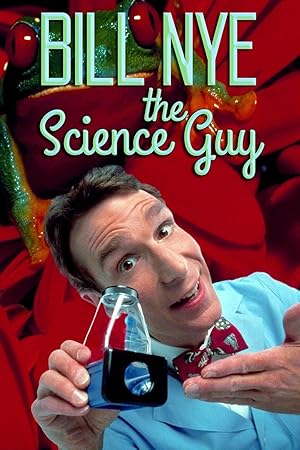
Bill Nye The Science Guy poster

Bill Nye The Science Guy

1993 20-25 min Ages 6-12

While primarily known from television, the official channel provides access to the classic episodes that defined science education for a generation. Bill Nye's unique blend of high-energy demonstration, clear explanation, and signature bowtie makes science immediately approachable and fun. It’s the gold standard for introducing core concepts across chemistry, biology, and physics to the middle-elementary set.

Watch if: you want the certified, high-energy classic that shaped a generation of science lovers through memorable demos.

Honorable Mentions

MinutePhysics
MinutePhysics 2011

The progenitor to MinuteEarth, this channel focuses purely on physics concepts using simple whiteboard animation for crystal-clear understanding.

Mystery Science
Mystery Science 2012

Designed for hands-on classroom engagement, this channel offers wonderful mini-explainers that prompt kids to ask deeper, more meaningful scientific questions.

The Backyard Scientist 2015

Features incredible, high-energy, and sometimes slightly dangerous-looking (but safe!) chemical reactions and experiments perfect for older, thrill-seeking viewers.

It's Okay To Be Smart 2011

Focuses on storytelling and curiosity-driven science, often exploring the intersection of biology, nature, and psychology in a compelling way.

TED-Ed
TED-Ed 2012

While broader than just science, its library contains exceptional, expertly animated lessons that break down complex scientific principles with high production value.

Operation Ouch
Operation Ouch 2012

Two doctors present engaging, funny, and sometimes gross explorations of the human body, making anatomy and medicine thrilling for younger viewers.

Frequently Asked Questions

How do I ensure the science content these channels present is accurate?

The channels on this list are selected specifically for their high standard of scientific rigor. Look for hosts with science backgrounds (like Mark Rober, an engineer, or Derek Muller, a PhD) and look for cited sources in video descriptions. For younger-focused channels like SciShow Kids, their team consults experts to simplify concepts without compromising the core facts, providing a reliable entry point for early learners.

Are these channels appropriate for both younger kids and older tweens?

We've included a range, as curiosity evolves with age. Channels like Peekaboo Kidz and SciShow Kids are perfect for the 4-9 range with simple concepts. For tweens (10+) ready for more depth, Veritasium, SmarterEveryDay, and Kurzgesagt offer richer, more complex explorations that still maintain high entertainment value. Always preview a video to match the complexity to your child's specific maturity level.

What is the best way to use these videos to foster 'real' science learning?

The goal is to ignite curiosity, not replace hands-on time. Use these videos as a springboard: pause after an experiment demonstration and ask your child to predict the next step, or encourage them to safely recreate a simple concept they saw. The best use is turning passive viewing into an active discussion about 'what if' and 'how do you know?'

Do these channels cover topics beyond typical school subjects like physics and biology?

Absolutely. Channels like Kurzgesagt cover philosophy and psychology alongside hard science, while Mark Rober tackles engineering challenges that integrate math and physics. BrainPOP offers a broad K-12 curriculum view. This diversity ensures that your science-curious child gets exposure to the full spectrum of STEM and related critical thinking fields.

Link copied!