¿Qué pasaría si cada vez que tomaras un bolígrafo, estuvieras realizando un pequeño acto de magia?
En el Antiguo Egipto, la gente creía que el conocimiento no era algo que simplemente se aprendía en la escuela. Lo veían como un regalo de Thot, el misterioso dios de cabeza de ibis, señor de la sabiduría, la escritura y la luna.
Imagina que estás de pie a orillas del río Nilo hace cuatro mil años. El sol se está poniendo y el calor del día finalmente comienza a disminuir. En los altos juncos de papiro, un pájaro de patas largas con un pico curvado permanece inmóvil. Este es el ibis, un pájaro que los egipcios observaban con gran curiosidad.
Notaron cómo el ibis usaba su pico como si fuera una pluma, sumergiéndolo en el lodo para buscar comida. Para los egipcios, esto se parecía a un escriba que mojaba un pincel en la tinta. Empezaron a contar historias de un dios que se movía con esa misma gracia silenciosa. Lo llamaron Thot.
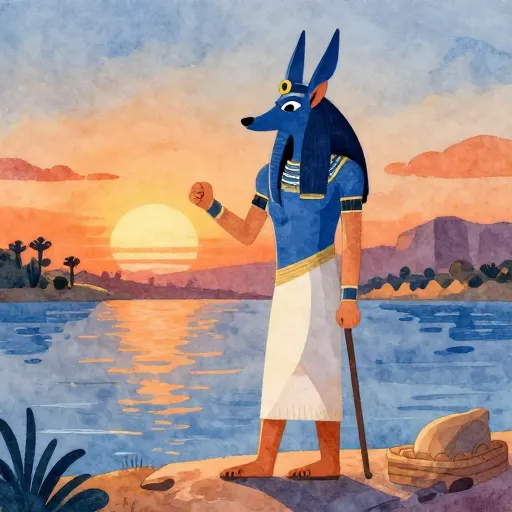
Imagine a god with the body of a man but the head of a tall bird. His beak is long and curved like a crescent moon. He carries a wooden palette with two wells of ink and a sharpened reed. He doesn't need to shout to be heard; his power comes from the ink he spills on the page.
El Inventor del Alfabeto del Mundo
Antes de Thot, los egipcios creían que el mundo era un poco confuso. Las ideas existían, pero no había forma de atraparlas y conservarlas. Thot lo cambió todo al inventar los jeroglíficos, que los egipcios llamaban medut netjer, o las "palabras de los dioses".
Él no solo les dio a las personas una forma de hacer listas o escribir recibos. Les dio una manera de hacer permanentes los pensamientos. Esta fue una idea radical porque significaba que la voz de una persona podía perdurar incluso después de que se hubiera ido. La escritura era un puente entre el mundo humano y lo divino.

Mira says:
"If Thoth invented writing, does that mean he's responsible for all the homework in the world? Or is he the one who helps us find the right words when we're stuck?"
Thot era el secretario personal de los dioses. Cada vez que el rey de los dioses, Ra, emitía un decreto, Thot estaba allí con su paleta y su caña. Se aseguraba de que el universo funcionara con un horario, registrando los movimientos de las estrellas y la crecida del Nilo.
Sin embargo, no todos pensaron que la escritura era un regalo perfecto. Algunos temían que si escribíamos las cosas, dejaríamos de usar nuestro cerebro. Les preocupaba que nuestros recuerdos se volvieran débiles y perezosos porque ya no tendríamos que llevar nuestras historias dentro de nosotros.
For this discovery of yours will create forgetfulness in the learners' souls, because they will not use their memories.
El Señor de la Luna Plateada
Mientras Ra era el dios del sol brillante y caluroso, Thot era el maestro de la luna. Los egipcios notaron que la luna cambiaba de forma cada noche, pero siempre seguía un patrón predecible. Thot fue quien midió este tiempo, creando los primeros calendarios.
Lo llamaban el "Aten Plateado", o el sol nocturno. Cuando el mundo se oscurecía y el sol viajaba por el inframundo, Thot tomaba la guardia. Él era la luz que ayudaba a las personas a encontrar su camino cuando las cosas se sentían inciertas u ocultas.
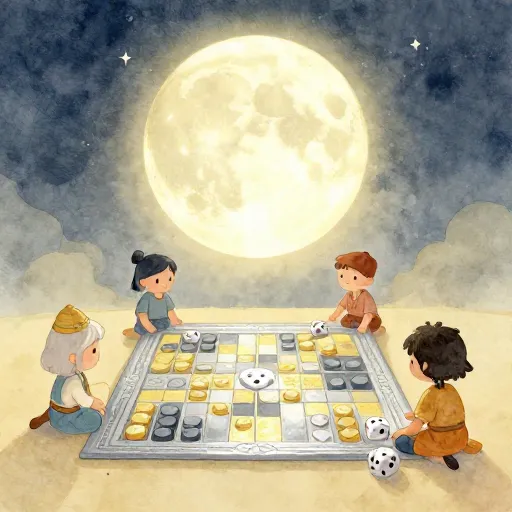
According to myth, the year used to be only 360 days long. Thoth gambled with the Moon god in a game of dice and won enough moonlight to create 5 extra days! This is why we have 365 days in a year. He used those extra days so the goddess Nut could give birth to her children.
Esta conexión con la luna también convirtió a Thot en el dios de las matemáticas y la ciencia. Fue él quien calculó la geometría de las pirámides y los límites de los campos de los agricultores. Para Thot, no había diferencia entre un hechizo mágico y una ecuación matemática. Ambos eran formas de entender cómo encaja el mundo.
Con frecuencia se le representaba no solo como un ibis, sino como un babuino. Si el ibis representaba al escriba silencioso y concentrado, el babuino representaba al protector ruidoso y feroz de la verdad. Se sabía que los babuinos chillaban ante el amanecer, lo que los egipcios veían como un saludo a la luz de la sabiduría.

Finn says:
"I wonder why he’s a moon god. The sun is so easy to see, but the moon changes every night. It’s like a mystery you have to solve over and over again."
La Pesada del Corazón
El trabajo más importante de Thot ocurría al final de la vida de una persona. En el más allá egipcio, cada alma tenía que entrar en el Salón de Ma'at. Allí, su corazón era pesado en una balanza gigante contra una sola pluma de avestruz, el símbolo de la verdad y el equilibrio.
Thot se paraba junto a la balanza, listo para registrar el resultado. No tomaba partido, y no se enfadaba. Simplemente observaba y escribía la verdad de quién había sido esa persona. Si eras amable y honesto, la pluma de Thot lo capturaría para siempre.
The gods believed that writing was a divine gift that allowed humans to communicate across time and space, preserving wisdom for thousands of years.
Some philosophers argued that writing was a 'poison' for the memory, making people think they were wise when they were actually just repeating things they had read.
¿Sabías que? En el arte egipcio, a Thot a menudo se le muestra sosteniendo una paleta con dos círculos de tinta: uno negro y uno rojo. La tinta negra se usaba para el texto principal, mientras que la tinta roja se usaba para encabezados importantes o para marcar los nombres de demonios peligrosos.
Ser el escriba del más allá significaba que Thot era el bibliotecario supremo. Guardaba el Libro de los Muertos, una colección de hechizos e instrucciones para ayudar a las almas a navegar por el peligroso inframundo. Él era quien conocía los nombres secretos de los monstruos y las contraseñas para las puertas mágicas.
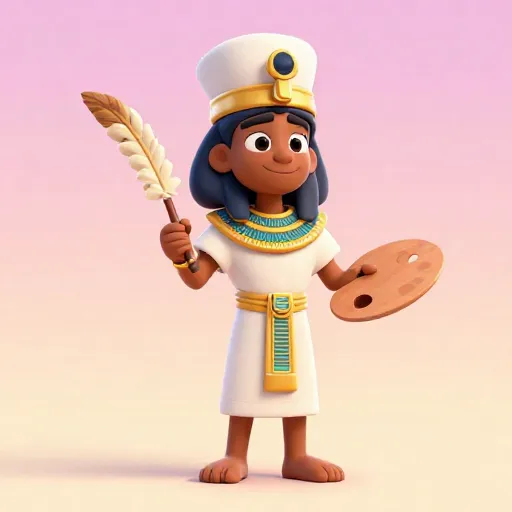
I am Thoth, the perfect scribe, whose hands are pure. I am the lord of purity, the destroyer of evil, the scribe of right and truth.
El Dios de la Magia y el Equilibrio
Thot también era el gran mediador. Cuando los otros dioses tenían peleas masivas que hacían temblar la tierra, Thot era quien intervenía para negociar. No usaba una espada ni un escudo. Usaba sus palabras para traer de vuelta a Ma'at, el concepto egipcio de equilibrio cósmico y justicia.
Una de las historias más famosas involucra el Ojo de Horus. Durante una terrible batalla, al dios Horus le arrancaron el ojo y lo esparcieron en pedazos. Thot no solo encontró los trozos; los sanó y los volvió a juntar, haciendo que el ojo quedara entero de nuevo.
Thoth was the 'Lord of the Palette.' Try making your own 'Book of Thoth' this week. Find a small notebook and, instead of writing what you did, write down one thing you observed each day that felt like a secret. Maybe it's the way a shadow moves or a word you've never heard before.
Esta historia nos muestra que Thot no solo se trataba de datos y cifras. Se trataba de sanar lo que estaba roto. Creía que el conocimiento debía usarse para hacer el mundo "correcto" de nuevo. Para los egipcios, una persona verdaderamente sabia era alguien que podía traer paz a una habitación solo con hablar.
Mira says:
"It's cool that he fixed the Eye of Horus. It's like he was the first doctor, but for the whole universe instead of just for people."
A Través de las Edades: Cómo Viajó Thot
Thot no desapareció cuando el Imperio Egipcio se desvaneció. Las ideas tienen una forma curiosa de ponerse ropa nueva y aparecer en diferentes siglos. A medida que el mundo cambiaba, la gente seguía encontrando nuevas formas de hablar del dios de la sabiduría.
Through the Ages
Cuando los griegos llegaron a Egipto, quedaron asombrados por Thot. Vieron a su propio dios, Hermes, en él. Finalmente lo combinaron en un superdios llamado Hermes Trismegisto, que significa "Hermes el Tres Veces Grande". Esta versión de Thot se convirtió en un héroe para los alquimistas y científicos medievales.
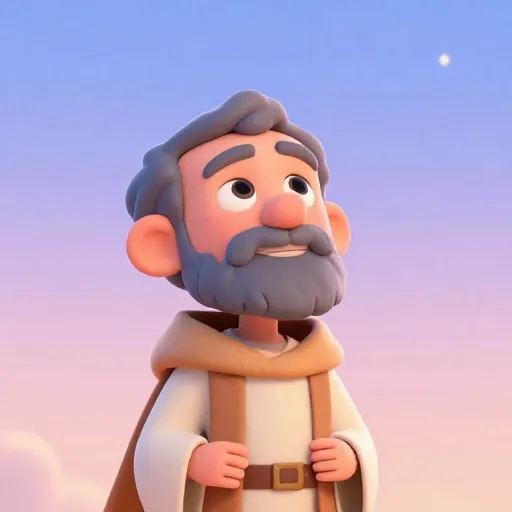
Thoth wrote the books, but it is we who must read the stars.
El Silencio del Escriba
Hoy en día, quizás no adoremos a Thot en templos, pero vivimos en un mundo que él reconocería. Cada vez que programas una computadora, escribes un poema o resuelves un acertijo complicado, estás siguiendo los pasos de Thot. Estás tomando los pensamientos desordenados e invisibles de tu cabeza y convirtiéndolos en algo real.
Thot nos recuerda que hay un cierto poder en estar callado. El ibis no canta una canción fuerte; observa y espera. A veces, la mejor manera de entender el mundo no es gritar sobre él, sino mirar de cerca y esperar a que la verdad se muestre.
The library at Alexandria, the most famous library in the ancient world, was often associated with Thoth. It was a place where people from all over the world came to share ideas, proving that Thoth's 'magic' of writing could bring completely different cultures together.
Algo para Pensar
If you had to choose an animal to represent 'Wisdom' today, what would it be?
The Egyptians chose the ibis and the baboon, but the world has changed. Think about an animal you've seen and what kind of knowledge it might hold. There's no right or wrong choice, just a new way of seeing.
Preguntas sobre Religión
Why does Thoth have a bird head?
Was Thoth a 'good' god?
Did Thoth really write books?
The Infinite Inkwell
Thoth invites us to see the world as a giant book waiting to be read. Whether you are looking at the stars or the ink on this page, you are participating in a story that began thousands of years ago. Keep your eyes open, your pen ready, and your heart balanced.