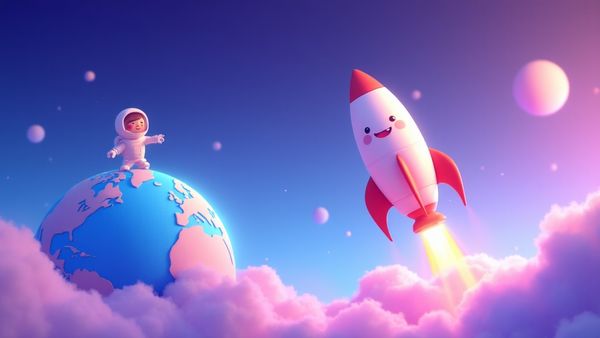
Space exploration is the journey to build machines and send humans to orbit the Earth and travel beyond. The adventure officially began in the 1950s with the Space Race. The first human in space, Yuri Gagarin, completed a 108-minute orbit in 1961!
Have you ever looked up at the night sky and wondered what it would be like to float among the stars and planets? We do! That dream of exploring space is called space exploration, and its history is full of incredible science, brave adventurers, and amazing races!
For thousands of years, people just looked up. But in the last century, we finally figured out how to build machines powerful enough to escape Earth’s gravity! The real adventure started in the 1950s with the thrilling Space Race between two huge countries: the Soviet Union (which is now mostly Russia) and the United States. The first big win happened on October 4, 1957, when the Soviet Union launched Sputnik 1, the very first artificial satellite! This little beep-beep-beeping metal ball completely changed the world and kicked off an exciting race for the cosmos!

Mira says:
"I can't believe they used a dog as the first living thing to orbit Earth! Laika the dog was so brave. Thinking about all those 'firsts' makes me realize how much teamwork it takes to even get off the ground!"
What Was the Space Race Really About?
The Space Race wasn't just about building cool rockets; it was a big competition! After the Soviets launched Sputnik 1, the US government knew they needed to catch up fast. This competition pushed scientists and engineers to invent things quicker than ever before.
The Soviets kept getting amazing 'firsts.' Just a month after Sputnik 1, on November 3, 1957, they sent the first living creature into orbit: a brave dog named Laika! The USA finally got its first satellite, Explorer 1, into space on January 31, 1958.
Mind-Blowing Fact!
The word 'Sputnik' in Russian actually means 'fellow traveler'! Imagine having a tiny metal traveler orbiting above your house every 90 minutes!
Humans Take Flight: The First Brave Astronauts
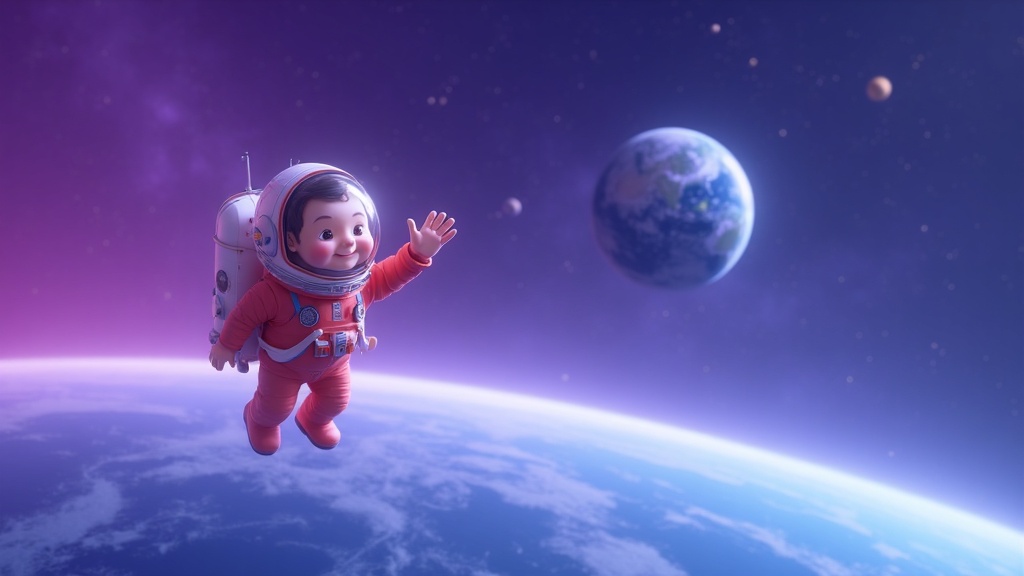
Sending robots and satellites was cool, but the next giant leap was sending people! On April 12, 1961, Russian cosmonaut Yuri Gagarin became the very first human to fly into space and orbit the Earth. His flight lasted 108 minutes!
The Americans were right behind him! Just three weeks later, Alan Shepard became the first American in space. Then, in 1962, John Glenn became the first American to orbit the Earth, completing three orbits!
Who have walked on the Moon
The first Moon landing (Apollo 11)
Collected by Armstrong & Aldrin
Who have traveled to the Moon
How Did We Land on the Moon?
The biggest goal of the Space Race was put forward by US President John F. Kennedy in 1961: landing a person on the Moon and bringing them back safely before the end of the decade! This was the Apollo Program.
It took years of testing, building giant rockets called Saturn V, and training the best pilots and scientists. The mission that finally did it was Apollo 11.
The Giant Leap for Mankind
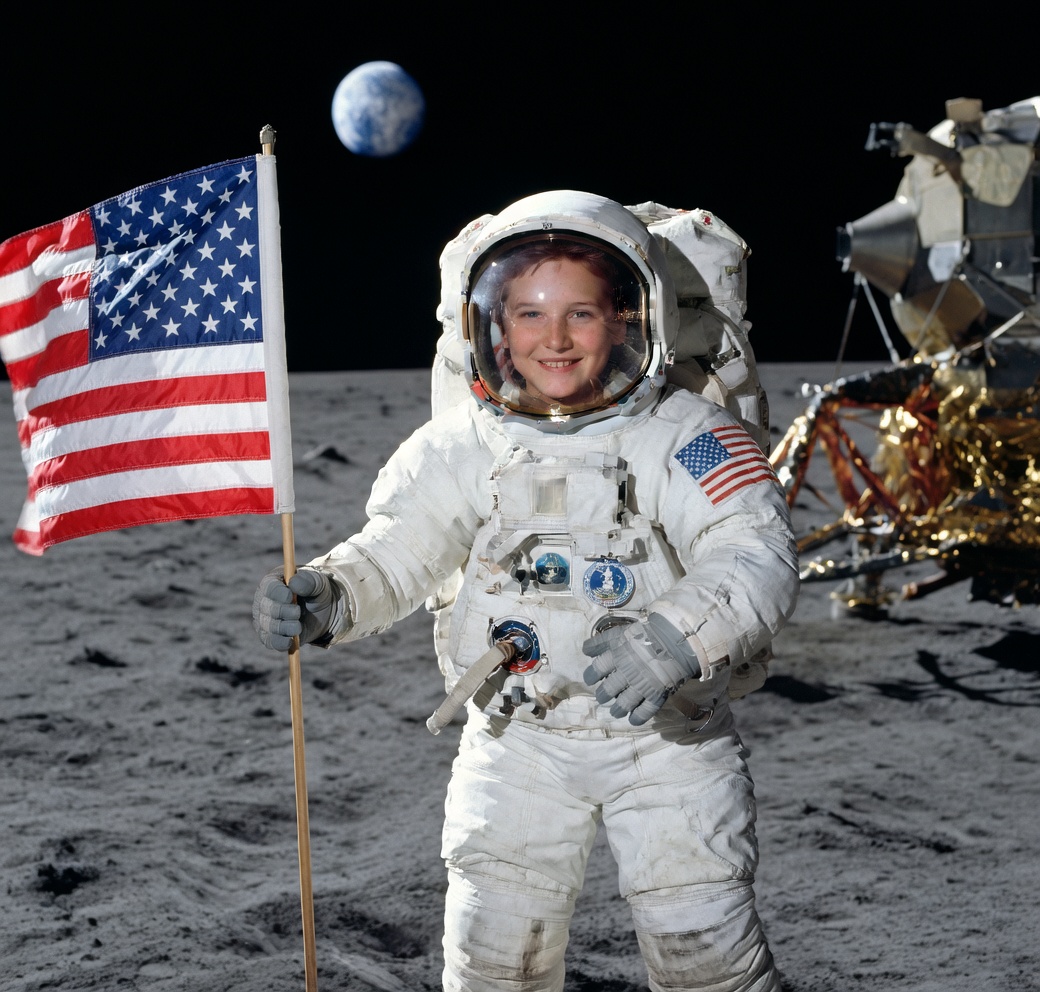
On July 20, 1969, the world held its breath as the Lunar Module, named Eagle, landed on the Moon’s surface in a spot they called the Sea of Tranquility.
A few hours later, Neil Armstrong climbed down the ladder and declared his famous line: “That's one small step for man, one giant leap for mankind.” He was the very first human to walk on another world!
He was joined shortly after by Buzz Aldrin. Together, they spent about two and a half hours exploring and collecting Moon rocks before blasting back to their command module pilot, Michael Collins, who waited in orbit.
💡 Did You Know?
The last time humans walked on the Moon was during the Apollo 17 mission in December 1972! The last person to leave a footprint was Gene Cernan.
🎯 Quick Quiz!
What was the name of the very first artificial satellite launched into space?
What Came After the Moon Landings?
After the initial excitement of the Space Race, exploration didn't stop—it just changed focus! Countries started working together, which officially ended the race with the Apollo-Soyuz Test Project in 1975.
We started building amazing things that stay in space for a long time, like space stations. Russia launched the first one, Salyut 1, in 1971, and the USA followed with Skylab in 1973.
- The Space Shuttle: The US started the Space Shuttle program in 1981. These were the first reusable spacecraft, like airplanes that could fly to space and back again!
- Hubble Space Telescope: Launched in 1990, this amazing telescope orbits above Earth’s blurry atmosphere, sending us crystal-clear pictures of distant galaxies and stars.
- International Space Station (ISS): Assembly began in 1998, and it’s a massive home where astronauts from many different countries live and work together, often for months at a time!
From that first tiny, beeping satellite in 1957 to floating research labs today, the history of space exploration for kids shows us that when we dream big and work hard, there are no limits to what humans can achieve—even leaving our own planet!
Questions Kids Ask About Space
Keep Reaching for the Stars!
What an incredible journey! From tiny beeps in the sky to walking on the Moon, space exploration history is proof that curiosity can take us anywhere. Who knows what incredible 'firsts' the next generation of space explorers—maybe even you—will achieve? Keep learning, keep wondering, and keep looking up!