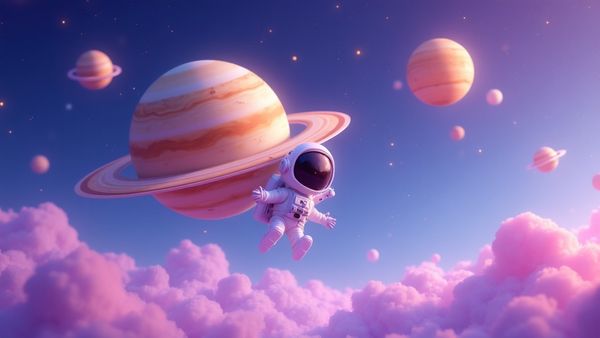
Jupiter is the largest planet in our Solar System, known as a 'gas giant.' It is so massive that you could fit over 1,300 Earths inside it! Kids will be amazed by how huge our cosmic neighborhood really is.
Did you know that looking up at the night sky is like looking back in time? Wow!
Space is HUGE, and humans have made some truly incredible discoveries about the stars, planets, and everything in between! For centuries, people wondered what was out there, but it wasn't until we developed amazing tools—like super-powerful telescopes—that we started solving the universe's biggest mysteries. We’ve learned that our Earth is just one small part of a giant neighborhood called the Solar System. One of the most mind-boggling facts for kids is how far away things are! For example, the Moon is an average of 238,855 miles (384,400 km) away from Earth, which is about 30 Earths lined up in a row!

Mira says:
"I think the coolest part of space history is that we keep discovering new things! Every time scientists look through a better telescope, like the Hubble or the James Webb, it’s like opening a brand-new chapter in the universe’s storybook. Keep looking up!"
What is the Biggest Planet in Our Solar System?
If you think Earth is big, wait until you hear about Jupiter! Jupiter is the fifth planet from the Sun and the undisputed champion of size in our Solar System. It’s a massive ball of swirling gas, which is why we call it a 'gas giant.'
Jupiter is so gigantic that its diameter is about 11 times wider than Earth! That’s huge! You could fit more than 1,300 Earths inside Jupiter’s giant volume. It’s so big that its mass is actually 2.5 times more than all the other planets in the Solar System put together!
Mind-Blowing Fact!
Jupiter has a giant storm called the Great Red Spot, and it's been raging for hundreds of years! This storm is so big that it is actually twice the width of our entire Earth!
How Fast is Light and How Old is the Sun’s Glow?
Light is the fastest thing we know in the entire universe! Light travels at an incredible speed of about 186,000 miles per second! That’s like zooming around the entire Earth 7.5 times in just one second!
So, how long does it take for the light from the Sun to reach us here on Earth? Even though the Sun is super far away, its light only takes about 8 minutes and 20 seconds to travel across space and light up our day!
(To Earth)
(Than Earth)
(Sputnik 1 Launch)
(Apollo 11)
How Did Humans Start Exploring Space?
Space exploration didn't just happen overnight! It started with super smart scientists building powerful rockets to beat Earth's gravity.
A huge moment in history for space discovery for kids to know about was in 1957 when the Soviet Union launched Sputnik 1, the first artificial satellite to orbit Earth. This kicked off the 'Space Race'!
Then came the amazing human missions! On April 12, 1961, Russian cosmonaut Yury Gagarin became the first human to circle the Earth in space.
The Giant Leap: Walking on the Moon
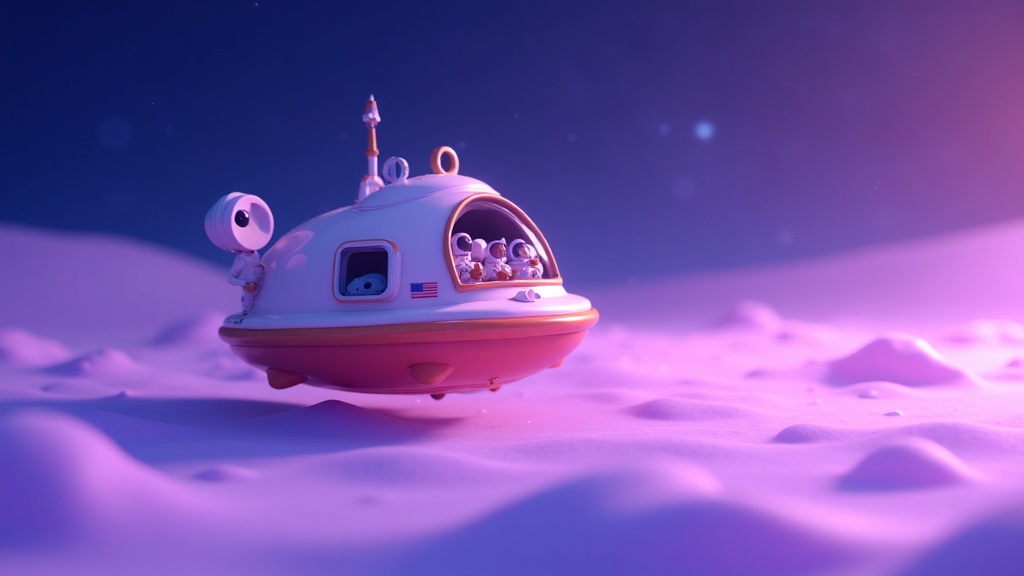
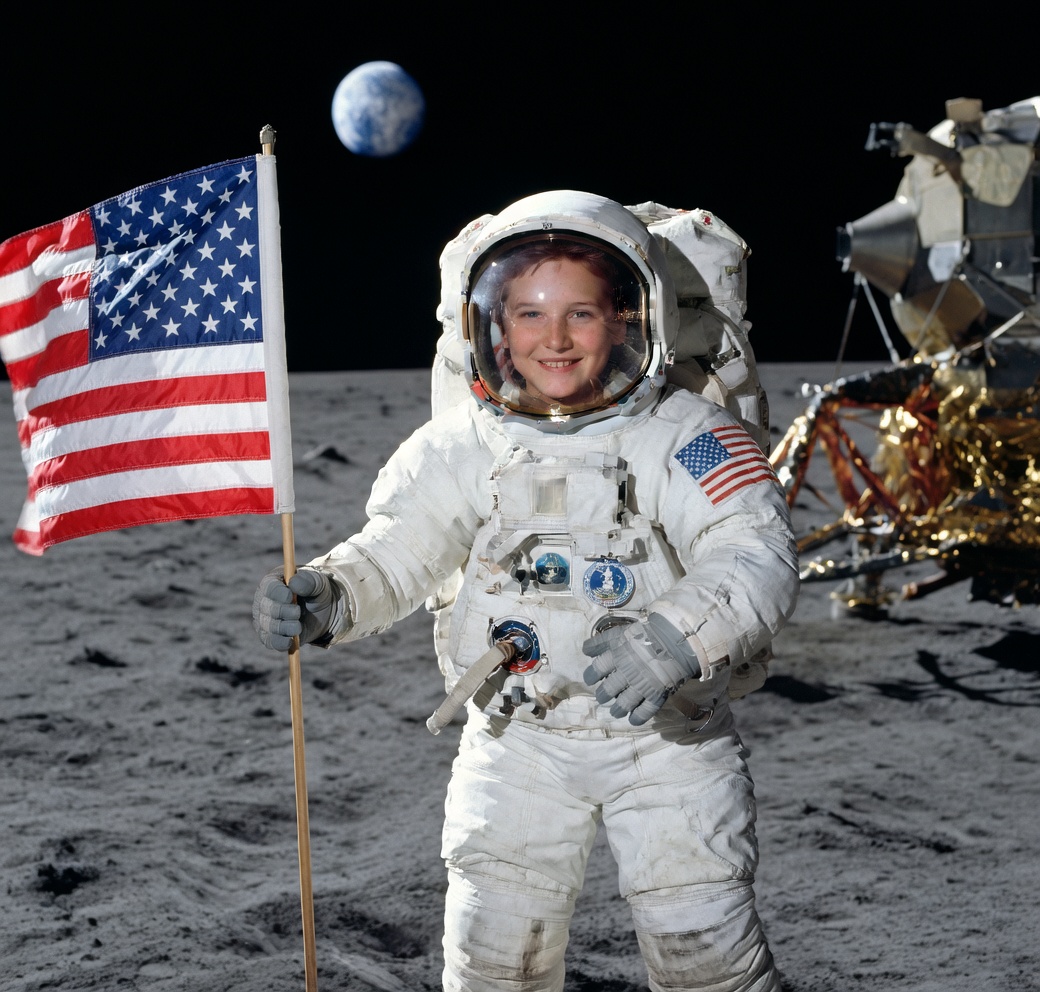
The biggest 'step' in space discovery for many people was when humans landed on the Moon! This happened on July 20, 1969, with the Apollo 11 mission. Astronaut Neil Armstrong was the very first person to walk on the Moon and said his famous line: 'That’s one small step for a man, one giant leap for mankind.'
💡 Did You Know?
Did you know that the Moon is slowly floating away from Earth? It’s moving about one inch farther away every single year!
🎯 Quick Quiz!
Which planet is the largest in our Solar System?
Who Uses Telescopes to Discover New Things Today?
Today, scientists use amazing tools like the Hubble Space Telescope (launched in 1990) and the newer James Webb Space Telescope to see even farther and clearer than ever before!
These giant space 'eyes' help us see ancient galaxies, how stars are born, and even study other solar systems far away. Scientists recently discovered a system of six planets with perfectly timed orbits, calling it a 'golden target' for learning how solar systems form!
- The Voyager 1 & 2 Probes: Launched in 1977, these spacecraft are now exploring beyond our Solar System!
- Mars Rovers (like Perseverance): These robots drive on Mars, searching for signs that life might have existed there long ago.
- The International Space Station (ISS): This is a giant orbiting laboratory where astronauts from many countries live and work together to learn about space and how to live there.
Every single discovery, from the first satellite to the latest picture from a telescope, helps us answer big questions about where we came from and what else is out there. Space history is all about human curiosity pushing the limits of what we thought was possible for kids and adults alike!
Questions Kids Ask About Space
Keep Exploring the Cosmos!
Wow, we covered a lot of amazing ground—or should we say, space! Remember, the history of space discovery is still being written. Who knows, maybe YOU will be the one to make the next huge, history-making discovery for kids everywhere!