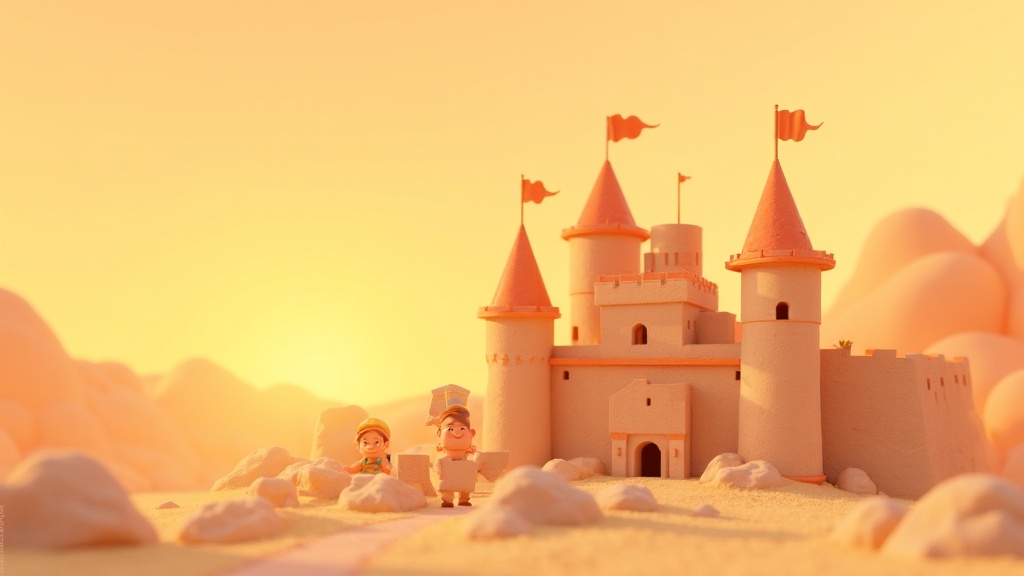
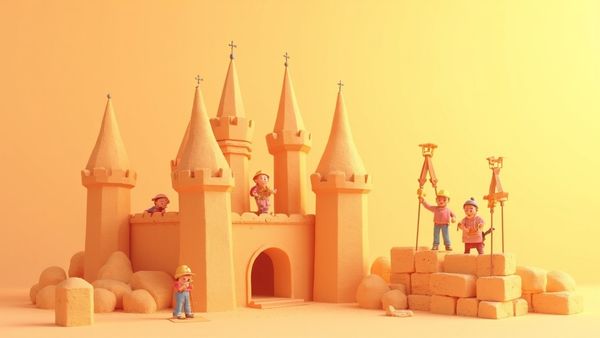
Medieval castles were massive, strong stone fortresses built to defend against invaders during the Middle Ages. A large castle required about 3,000 workers and took 2 to 10 years to complete using skilled masons and quarrymen. See how ancient engineers achieved these huge feats without modern machines!
Have you ever looked at a giant, strong castle and wondered: How on earth did they build that without cranes or bulldozers?!
Castles were the ultimate super-fortresses of the Middle Ages, standing strong against enemies for hundreds of years! Building one was a HUGE job, one of the biggest projects of the time. It took amazing planning, tons of hard work, and a massive team of skilled builders. A huge stone castle could take anywhere from two to ten years to finish! Think about that—you might be born, grow up, and still see the last stone being placed! For kids learning history, understanding the building process shows just how clever people were back then.

Mira says:
"Wow! If a massive royal castle cost a king a fortune, I bet the transportation of all those stones cost even more! It makes me realize how important rivers were for moving super heavy things back then."
What Were Castles Made Of?
Castles weren't just built from whatever was nearby; the materials had to be super strong to stop invaders. The earliest castles were often made of wood, which was quick to build but easy to burn down! Once they got serious, they switched to stone.
Stone was the best choice for strong walls. Builders used whatever stone they could find nearby—often sandstone or limestone. The truly thick walls often had two sides made of nicely cut stone, called ashlar, with the middle packed tight with broken-up, irregular stones called rubble and mixed with mortar.
Mind-Blowing Fact!
The sticky glue that held the stones together was called mortar! It was made by burning limestone or chalk in a kiln to make quicklime, then mixing it with sand and water.
How Many People Did It Take to Build a Fortress?
Imagine a construction crew the size of a small town! A big castle project needed about 3,000 workers! This wasn't just one type of worker, either. You had quarrymen to dig the stone, carpenters for all the wood needed for roofs and scaffolding, blacksmiths for tools, and the super-skilled masons.
The whole project was led by a Master Builder, like the famous Master James of St. George, who was in charge of building King Edward I's amazing castles in Wales. These master builders were the architects and project managers rolled into one!
Simpler wooden castles were much faster!
That’s more than a whole elementary school!
That's taller than some elephants stacked up!
How Did They Lift All That Rock? The Building Steps!
Building a castle was a careful, step-by-step process, even without power tools. It always started with picking the perfect spot, usually a high hill or cliff for the best view and defense.
Step 1: Digging Deep Foundations
Builders first marked out the shape, then dug deep trenches for the walls and towers. They tried to dig right down to the bedrock (solid rock underneath) to make the base super stable. These trenches were filled with packed rubble and mortar to create a strong foundation.
Step 2: Raising the Walls
Skilled masons carefully set the nice, cut stones (ashlar) on the outside in layers called courses. As the wall grew taller, they needed scaffolding—wooden frames built right into the wall using holes that were left open just for that purpose! These holes are still visible on old castles today!
To lift those heavy stones high up, they used man-powered cranes! Workers would walk inside giant wooden wheels (called treadwheels) to make the ropes and pulleys lift the stone up to the scaffolding.
💡 Did You Know?
Moving the stone was a HUGE problem! It could cost three and a half times more just to transport the materials to the site than to actually buy the stone itself! That’s why building near a quarry or river was so important.
🎯 Quick Quiz!
What was the name for the strong, neatly cut stones used for the *outside* of a castle wall?
Why Did Castle Building Slow Down?
Building a castle was hard work, and it was often seasonal. Work had to slow down or stop completely during the winter or early spring because it was too cold or wet for the mortar to set properly.
But the biggest reason castles stopped being built the same way was simple: better weapons! As cannons and gunpowder got more powerful, those thick stone walls weren't always enough. The focus shifted from building giant, tall castles to building different kinds of defenses.
- Motte and Bailey: The very first type, made mostly of earth and wood, could sometimes be built in just 20 days to three months!
- Stone Keeps: These were the tall, strong towers that came next and took a couple of years.
- Concentric Castles: The most complex type with multiple walls—these took the longest, sometimes six to ten years to complete!
Even though building a castle took years of effort from thousands of people using only simple tools like ropes, chisels, and sheer muscle power, the results were incredible! They are monuments to medieval engineering that still inspire us today, making history exciting for kids and adults alike!
Questions Kids Ask About Medieval History
Keep Exploring History's Amazing Builders!
Now you know the secrets behind those incredible stone walls! From digging the deep foundations to hoisting stones with human-powered cranes, building a castle was one massive team effort. What other structures do you think people built without electricity? Listen to our next episode to find out!