The Ice Age, or Pleistocene epoch, was a time lasting from 2.6 million to 11,700 years ago when global temperatures were up to 11°F lower than today. It was ruled by megafauna like the Woolly Mammoth. Learn how these giant, furry beasts survived the extreme cold!
Brrr! Imagine a world so cold that giant sheets of ice—called glaciers—covered huge parts of the planet, like a massive, slow-moving freezer! Does that sound like an awesome place to visit?
Welcome to the Ice Age! This time in Earth’s history, which scientists call the Pleistocene epoch, lasted from about 2.6 million years ago until 11,700 years ago. During the coldest parts, called glacial periods, global temperatures were about 11 degrees Fahrenheit (6 degrees Celsius) lower than today. But the cold wasn't empty! It was packed with the coolest, biggest, furriest, and scariest animals ever! Get ready to meet the Ice Age animals for kids that survived the chill!

Mira says:
"Wow, Finn! These animals had to be super tough to handle all that snow and ice. I bet their fur was thicker than my winter coat—like wearing a giant, shaggy, prehistoric sleeping bag!"
What is the Ice Age and Who Lived There?
The Ice Age wasn't just one long freeze; it was a time of big climate swings! Earth went through cycles of super cold times (glacials) and slightly warmer times (interglacials). We are actually still in an Ice Age today—it's just that we are in a warmer part called an interglacial period, which is why we have ice caps at the North and South Poles! But during the last major freeze, the world was transformed into the amazing 'mammoth steppe'—a huge grassy plain from North America all the way across Asia!
The animals that lived then are called megafauna because they were mega—that means HUGE! These aren't the dinosaurs you read about; the Ice Age animals lived much, much later, even after humans had evolved.
Mind-Blowing Fact!
The last Ice Age ended around 11,700 years ago, making way for the world we know today, called the Holocene epoch!
Meet the Star: The Mighty Woolly Mammoth!
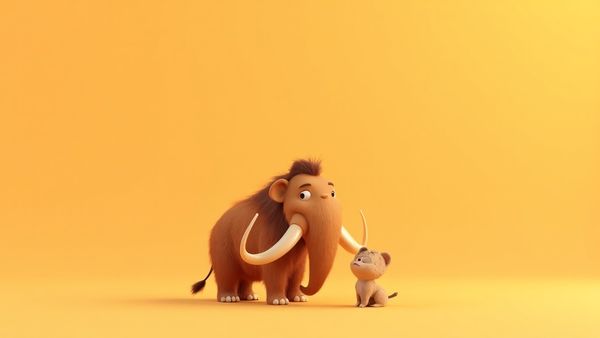
The Woolly Mammoth is the most famous Ice Age animal, and for good reason! These giants looked a lot like today's Asian elephants, but they were perfectly built for the cold. They had a huge layer of fat and a thick, shaggy coat of fur—sometimes up to three feet long! They mainly munched on grasses and sedges, using their long, curved tusks to move snow out of the way to find food.
(Similar to modern elephants!)
(Some ancient species were taller than modern elephants!)
(That's heavier than 50 adult elephants combined!)
(A small group survived on Wrangel Island!)
How Did the Saber-Toothed Cat Hunt?
Next up: the terrifyingly cool Saber-Toothed Cat! Don't call them tigers—they aren't actually related to modern tigers or lions. They were in their own special cat family called Smilodon.
Those Dagger Teeth!
Their most famous feature was their enormous canine teeth. These 'sabers' could grow up to seven or even eight inches long! Imagine having teeth sticking out that far! They used these like giant steak knives to slash at the bellies or throats of their prey.
💡 Did You Know?
Saber-toothed cats were built more for power than for speed! They had short, bulky legs and a short tail, making them ambush predators. They would sneak up, grab the victim with powerful front legs, and then use those giant teeth to finish the job, rather than chasing prey for miles like a cheetah!
🎯 Quick Quiz!
How long could the iconic saber-teeth of the Smilodon cat grow?
Who Were the Other Ice Age Stars?
The Ice Age was full of amazing creatures besides the famous two. These animals needed special coats or adaptations to stay warm during the long, chilly years.
- Woolly Rhinoceros: Imagine a rhino covered head-to-toe in thick, reddish-brown fur with a giant horn! They were roughly the size of a modern rhino but much hairier.
- Giant Ground Sloth: Not the small, slow tree-dwellers you see today! These sloths could grow up to 20 feet long—as tall as a small bus when standing up!
- Cave Bears: These powerful bears were much larger than today’s brown bears, sometimes standing nearly 11.5 feet tall when on their hind legs!
- Giant Beavers: Yes, even beavers were mega! They were about the size of a black bear and could chew down trees with ease.
Sadly, most of these incredible Ice Age giants—the megafauna—died out as the climate warmed up and the glaciers melted about 10,000 years ago. Scientists think the changing plants and the arrival of early human hunters played a big role in why these amazing beasts disappeared from our planet forever.
Questions Kids Ask About Prehistory
Keep Exploring the Prehistoric Past!
What an adventure through the frozen past! From furry giants to giant cats, the Ice Age was an amazing chapter in Earth's history. Keep listening to History's Not Boring to discover more incredible stories from millions of years ago and way up to today!