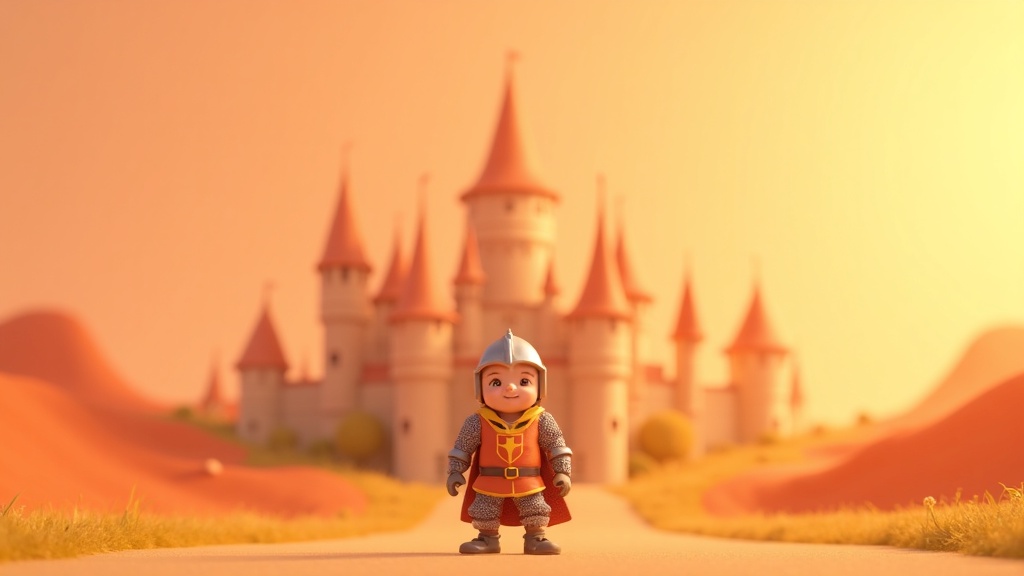

Knight armor evolved from chain mail to full plate armor. A full suit of plate armor weighed between 45 to 60 pounds, designed to be worn effectively in battle. This incredible metal suit protected medieval warriors, allowing them to be the rockstars of the Middle Ages!
Have you ever seen a picture of a knight and thought, 'Wow, that person is wearing a walking metal robot!'?
Knights were the rockstars of the Middle Ages—brave warriors who served lords and fought for their kingdoms! But what made them so tough to beat on the battlefield? You guessed it: their incredible armor! This metal suit wasn't just for looking cool; it was super important protection. A full suit of plate armor could weigh around 60 pounds—that’s about as much as a big bag of dog food! But don't worry, we're going to break down how they actually moved in all that metal!

Mira says:
"It’s amazing to think that a suit of armor was custom-made for each knight, just like a perfect superhero costume! They had to fit *just right* to let the knight run and fight without tripping over their own gauntlets!"
What is Armor? Mail vs. Plate!
Before knights wore big sheets of metal, they started with something called chain mail.
Imagine linking thousands of tiny metal rings together to make a shirt, called a *hauberk*. A chain mail hauberk alone could weigh up to 30 pounds! It was flexible, which was great, but sharp, pointy things like arrows could sometimes slip through the gaps.
That’s when things got an upgrade! By the 1400s, knights were rocking full plate armor. This was made of large, overlapping steel plates shaped perfectly to cover the entire body. This new metal armor offered way better protection against sword slices and even heavy blunt weapons like maces.
Mind-Blowing Fact!
Knights often wore a thick, padded layer called an 'arming doublet' or gambeson *under* their metal armor! This helped cushion the blows and stop the metal from rubbing their skin raw.
How Heavy Was All That Steel, Really?
The idea that knights were so heavy they needed a crane to get on their horse is mostly a myth! While armor was heavy, it was *designed* to be worn.
A full suit of late-era plate armor usually weighed between 45 to 60 pounds (about 20-27 kilograms). Believe it or not, that’s sometimes *less* than what modern soldiers carry in their packs today!
(Full Plate Armor)
Around this century
For one custom suit
How Did They Make Such Awesome Metal Suits?
Making one of these suits was a *huge* job that took specialized craftspeople called armorers.
It wasn't just one person hammering away! A whole workshop of skilled workers—master armorers, journeymen, and apprentices—had to work together.
The process involved heating the metal, hammering it over special forms to get the perfect shape, and then polishing it until it shone like a mirror!
Key Pieces of Plate Armor
Every piece had a special job to protect a part of the body:
Helm (or Helmet): Covered the head and face, with tiny slits so the knight could see.
Cuirass: The chest and back plate—protecting the heart and lungs!
Gauntlets: Metal gloves to protect the hands, super important for holding a sword or lance.
Greaves: Metal shin guards that protected the lower legs.
Sabatons: Articulated metal boots to keep the feet safe.
💡 Did You Know?
Because the weight was spread evenly across their whole body, trained knights could actually run, jump, and even do somersaults in their full plate armor! It was more about being fit than being a giant.
🎯 Quick Quiz!
What was the metal mesh shirt made of thousands of tiny rings called?
Who Were the Knights Anyway?
Knights weren't just anyone! They were usually nobles—the wealthy, powerful people in a kingdom. Being a knight was super expensive because you had to pay for your armor, your weapons, and most importantly, your war horse (called a *destrier*)!
To make sure their armor fit perfectly and they could handle the weight and action, knights trained from the time they were young pages and squires, practicing with heavy gear for many years.
- Status Symbol: A shiny suit of armor showed everyone how rich and important the knight was.
- Code of Honor: They followed a code called Chivalry, which meant being brave, honorable, and fair (though not all of them followed it perfectly!).
- Specialized Gear: Some armor was made just for fighting on horseback, and even heavier armor was made for tournaments like jousting!
The knights and their amazing metal suits were a huge part of the Middle Ages, showing off incredible metalworking skills for their time. They remind us that even with heavy equipment, being strong, smart, and well-trained is what truly helps you win the day!
Questions Kids Ask About Medieval History
Keep Exploring!
Did that make you want to strap on some imaginary armor and ride into adventure? Knights were tough, but learning their history is super fun! Check out our other episodes to keep traveling through time!