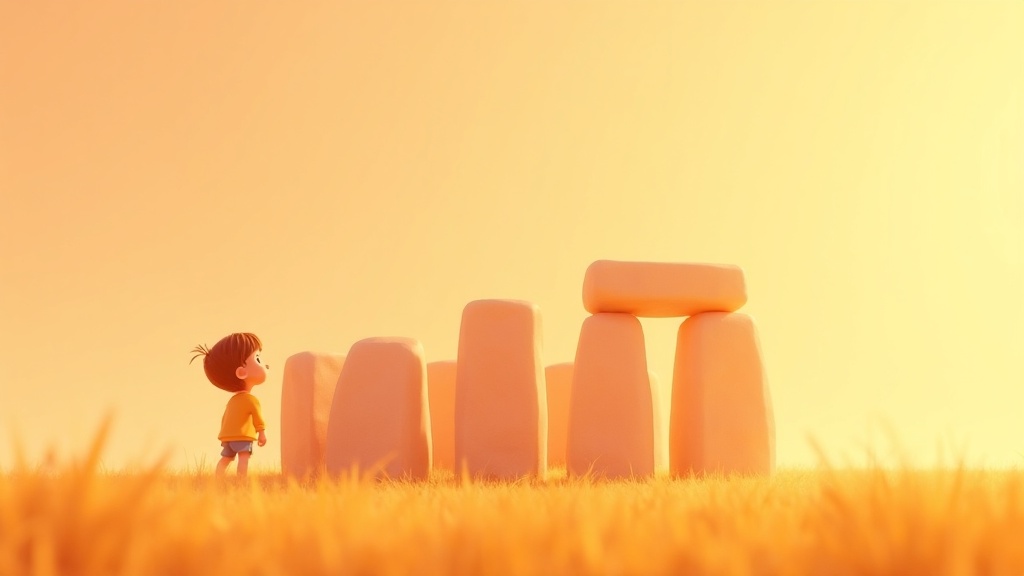
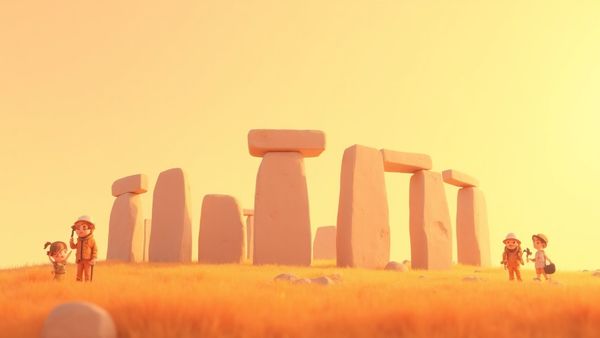
Stonehenge is an ancient prehistoric monument in Wiltshire, England, famous for its large circular arrangement of standing stones. It is older than the Egyptian pyramids, with the first construction starting around 5,000 years ago. Discover how ancient people moved these massive stones!
Imagine trying to build a giant stone structure—without wheels, cranes, or even written instructions! Sound impossible? Well, people in ancient Britain actually did it, creating one of the world's greatest puzzles: Stonehenge!
This amazing monument is located in Wiltshire, England, and it’s so old that Stonehenge is older than the pyramids of Egypt! The very first monument on the site started around 5,000 years ago, with the famous stone circle built in stages, dating back to about 2500 BC in the late Neolithic period. The people who built it left no diaries or instruction manuals, which is why it remains one of history’s most fascinating mysteries for kids and grown-ups alike!

Mira says:
"I can't believe those huge stones got there without trucks! Maybe they used super-strong ancient ropes and pulled them like a giant, slow-motion tug-of-war! It’s the ultimate ancient engineering challenge!"
What Exactly IS Stonehenge?
Stonehenge isn't just one pile of rocks; it’s a whole complex structure built over hundreds, maybe thousands, of years! Today, we can see the ruins, but it used to be much bigger. The structure is made up of two main types of stone: the huge Sarsen stones and the smaller Bluestones.
The original monument likely started as an earthwork—a huge circular ditch with banks dug using tools made of antlers! After that, the big stone building began. The stones we see now are the third main version of the monument, built in stages.
Mind-Blowing Fact!
Some of the smaller Bluestones actually make a musical *ring* when you strike them, like a bell or metal! That’s why they have that special name!
How Big Are These Ancient Giants?
The Sarsen stones are the real rock stars here. They are the biggest and most famous ones in the circle. Imagine carrying something that heavy—it’s mind-blowing for people studying history for kids!
These massive stones were shaped into uprights and topped with horizontal lintels, almost like a giant’s version of building blocks connected with special joints. It took serious teamwork to put those top pieces on!
(of a large Sarsen stone)
(of most standing Sarsen stones)
(from Wales, over 240 km)
(today, counting fragments)
How Did They Move the Stones So Far?
This is the biggest part of the mystery! Moving stones that weighed 25 tons or more without modern machines is incredibly difficult. The builders had no wheels or pulleys that we know of!
It took builders using only simple tools like deer antler picks to shape the stones.
The Bluestones' Epic Trek
The smaller Bluestones had the longest trip! They were brought from the Preseli Hills in South-West Wales—a distance of over 150 miles (or even 240 miles according to some sources)!
How did they do it? One popular idea is that they were floated on wooden rafts down the water, and then dragged over land using sledges, possibly rolling them on wooden logs like giant prehistoric wheels.
💡 Did You Know?
The huge Sarsen stones, while heavy, had a shorter trip! They likely came from Marlborough Downs, which was about 20 miles away from the site.
🎯 Quick Quiz!
Which part of Stonehenge came from the farthest away—over 150 miles?
Why Did Ancient People Build It?
Since we don't have any written notes, historians have to guess the *why*. The biggest clue comes from how it’s pointed!
The entire monument lines up perfectly with the sun during the longest and shortest days of the year. This is called the summer solstice sunrise and the winter solstice sunset.
- An Ancient Calendar: It could have been a giant way to track the seasons and know when to plant or harvest crops.
- A Place of Worship: Many believe it was a sacred place for religious ceremonies, perhaps honoring the sun and moon.
- A Healing Center: Some archaeologists think the stones might have been believed to have special healing powers, and people visited to feel better.
- A Cemetery: The very first parts of the site were used as a burial ground for many people.
No matter the exact reason, Stonehenge tells us that the people who lived thousands of years ago were smart, organized, and could work together to create something truly epic! They left us this incredible landmark to wonder about for kids today.
Questions Kids Ask About Ancient History
Keep Exploring History's Puzzles!
Isn't that wild? Stonehenge is a fantastic reminder that history is full of incredible feats of engineering and deep, unanswered questions. What do *you* think was the main reason they built it? Keep listening to History's Not Boring to uncover more amazing stories from the past!