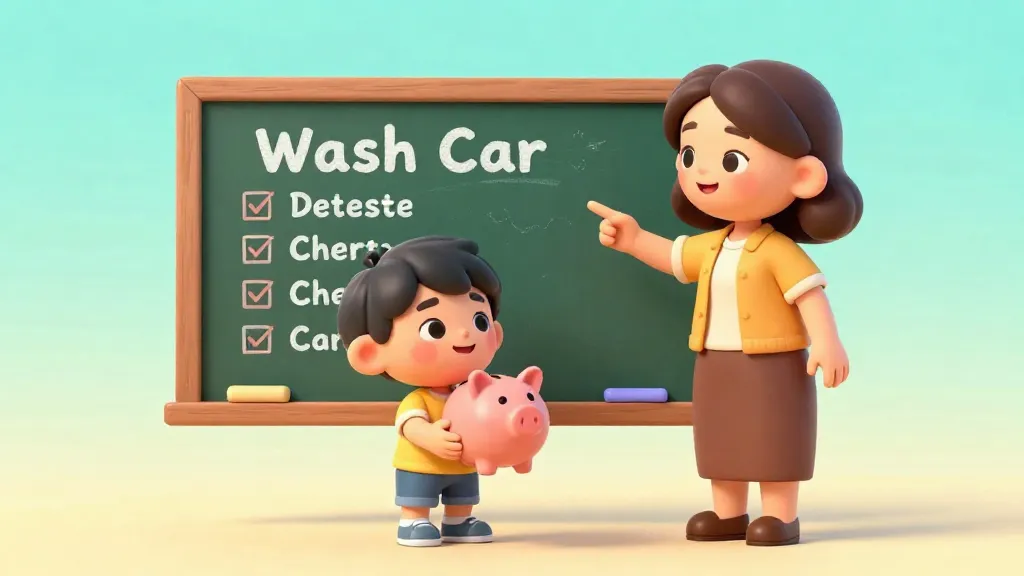
Your 8-year-old wants to earn extra money for a new game. Instead of saying 'I will think about it', you pull up this list together and they choose: washing the car (£3), tidying the living room (£1.50), or helping with dinner every night this week (£5).
They just became an employee. Using a chore menu shifts the dynamic from nagging to negotiating, helping children understand that earning money is a direct result of providing value or effort. This guide provides a ready-made list of tasks and fair payment rates for every age group.
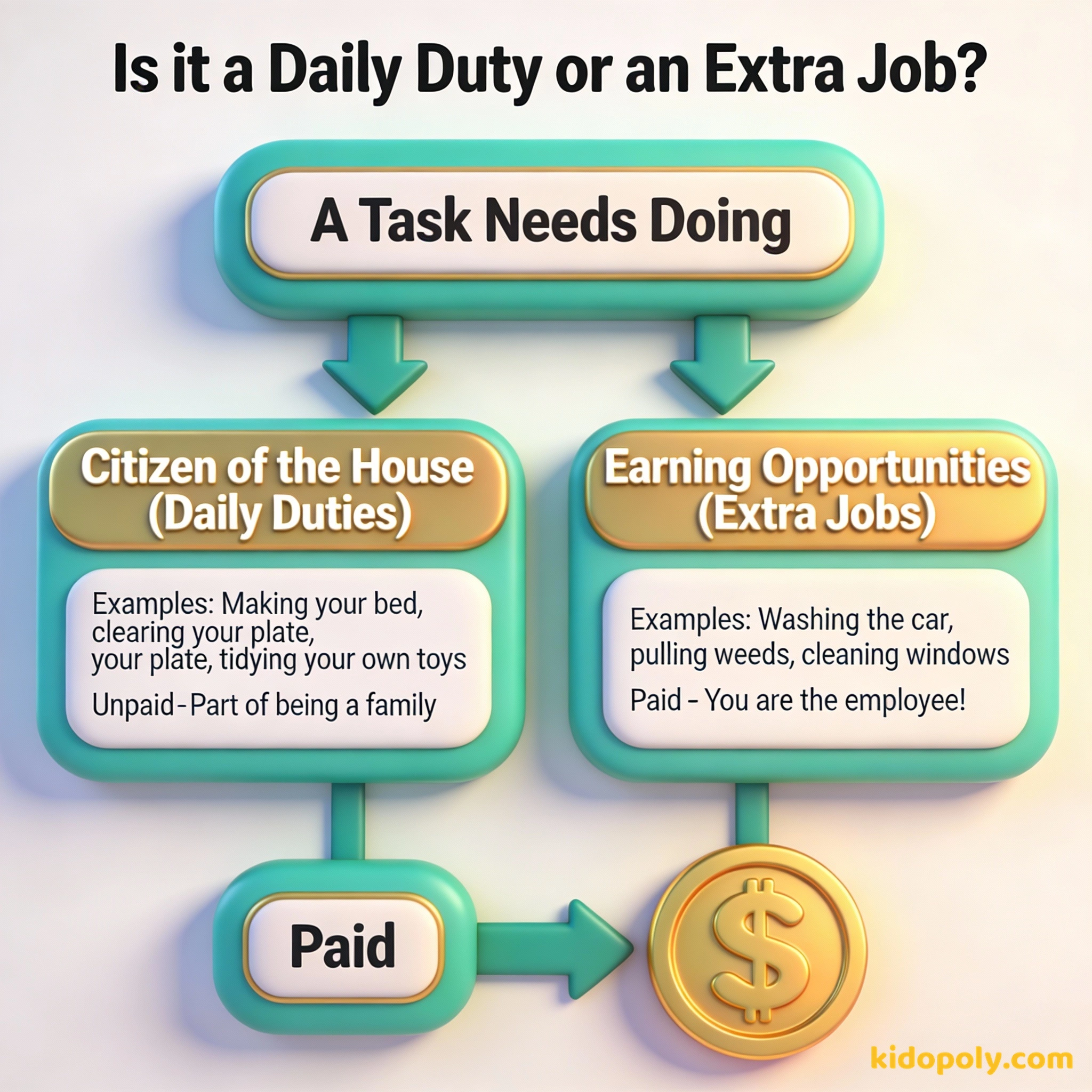
Most families find that the most successful way to handle chores and money is to separate 'Citizen of the House' duties from 'Earning Opportunities'. This avoids the trap of paying your child to do basic things like brushing their teeth or putting away their own shoes.
The 'Citizen' Model: You do chores because you live here and we help each other for free.
The 'Employee' Model: You do chores to earn money and learn the value of a hard day's work.
When a child asks to earn money, you can present them with a list of tasks that go above and beyond their daily responsibilities. This creates a clear work ethic where they see a direct link between the effort they put in and the reward they receive.

Do not save what is left after spending, but spend what is left after saving.
The Expected vs. Extra Distinction
Before you start paying, you must decide which chores are 'expected' and which are 'extra'. Expected chores are the things we do because we live together, like clearing your own plate after dinner or keeping your bedroom floor clear.

Finn says:
"So if I tidy my own Lego, I don't get paid, but if I tidy the whole living room for everyone, I do? That makes sense!"
Extra chores are tasks that help the whole family but aren't strictly the child's responsibility. These are the earning opportunities. By framing it this way, you teach them that being a family member involves unpaid contribution, but being a worker involves payment.
Chore Menu: Ages 5 to 7
At this age, the goal is to build the habit of completing a task from start to finish. Tasks should be short, physical, and have a clear 'finished' state. Rates are typically low because the tasks often require a little adult supervision.
- Matching socks from the laundry: 50p / $0.50 per basket
- Watering indoor plants: 50p / $0.50 per session
- Pulling 10 large weeds from the garden: £1.00 / $1.00
- Dusting low surfaces and skirting boards: £1.00 / $1.00
- Collecting all the recycling from around the house: £1.00 / $1.50
Create a 'Job Board' on your fridge. Write chores on sticky notes with the price on the back. When your child wants to buy something, they can 'pick a job' from the board to earn the cash.
Chore Menu: Ages 8 to 10
By age 8, kids have better coordination and can handle slightly more complex tasks. They can work independently for 15 to 30 minutes. This is a great time to introduce quality control, where they only get paid if the job is done properly.
- Washing the car (exterior): £3.00 / $4.00
- Vacuuming the hallway and living room: £1.50 / $2.00
- Helping with the weekly food shop (unloading): £1.50 / $2.00
- Raking leaves in the garden: £2.00 / $3.00
- Cleaning all the windows in one room: £2.00 / $2.50

I don't give allowances. I pay commissions. If you work, you get paid. If you don't work, you don't get paid.
Chore Menu: Ages 11 to 13
Middle schoolers can handle chores that involve multi-step processes. They are also starting to understand the value of money more deeply as they save for larger items like electronics or designer clothes.

Mira says:
"I realized that if I mow the lawn once a week for a month, I'll finally have enough for those new headphones without waiting for my birthday."
- Cooking a simple family meal (with supervision): £4.00 / $5.00
- Mowing the lawn (if safe and trained): £5.00 / $7.00
- Deep cleaning the bathroom: £4.00 / $5.00
- Walking the dog for 30 minutes: £3.00 / $4.00
- Sorting and starting a load of laundry: £2.00 / $3.00
Let's say a game costs £40. If you wash the car (£3) and vacuum (£1.50) every Saturday: Total per week = £4.50 Weeks to reach goal: £40 / £4.50 = 9 weeks. If you add one 'Deep Clean' (£4) once a month, you could get it in 7 weeks!
Chore Menu: Ages 14+
Teenagers are capable of 'professional' level help. At this age, you might even offer a 'project rate' for tasks that would otherwise cost you much more to hire out to a professional service. This helps them understand market rates.
- Cleaning the interior of the car (vacuum and polish): £7.00 / $10.00
- Tech support (sorting out parent's phone/computer issues): £5.00 / $7.00 per hour
- Clearing out the garage or shed: £10.00 / $15.00 (large project)
- Washing all the windows in the house (downstairs): £8.00 / $10.00
- Pet sitting/grooming for the afternoon: £5.00 / $7.00
Studies show that children who perform chores have higher self-esteem, are more responsible, and are better able to deal with frustration. Earning money just adds an extra layer of financial literacy to these life skills!
Seasonal and Outdoor Opportunities
Don't forget that the seasons bring new ways to earn. In the winter, shoveling snow or clearing a path is a high-value job. In the spring, helping with heavy garden mulching or cleaning patio furniture are great ways to boost their pocket money.

Remember that time is money.
Managing the Paycheck
To make this feel like a real job, try using a chore payment chart. This is a simple visual tracker where the child ticks off the job and you sign it off. It prevents arguments later about whether a job was actually completed.
Finn says:
"Is there a bonus if I do a really, really good job, or is the price always the same?"
When assessing the work, be a fair boss. If the vacuuming was rushed and they missed the corners, ask them to go back and finish it before the payment is logged. This teaches the importance of quality and taking pride in one's work.
Imagine you are the boss of a small company. If your employee only cleaned half the windows, would you pay them the full amount? Probably not! When you check your child's chores, you are playing the 'Manager' role to help them learn professional standards.
Something to Think About
If you could choose any 'extra' chore to do every single week for a year, which one would it be and why?
This isn't just about the easiest job; think about which task makes you feel most helpful or which one pays the best for the time it takes. Every person values their time and effort differently!
Questions About Earning & Pocket Money
Should I dock pay if the chore is done poorly?
What if my child refuses to do their paid chores?
Should I pay more for chores I really hate doing?
Ready to Start Earning?
Now that you have a list of tasks and prices, it is time to sit down together and pick your first 'Extra Job'. Remember, the goal isn't just to move money from a parent's wallet to a child's piggy bank, it is to build a bridge between effort and reward. Once they have earned that first bit of cash, they might want to learn about the pocket-money-and-chores balance or explore the value-of-money to decide what to do with their new earnings.