The Nina, Pinta, and Santa Maria were the three small ships Christopher Columbus used for his famous 1492 voyage across the Atlantic. The largest, the Santa Maria, was only about 18 meters long! Discover how these little wooden vessels changed world history.
Imagine sailing across a HUGE, wide-open ocean on a ship smaller than a modern swimming pool! Sounds crazy, right?
But that’s exactly what Christopher Columbus and his crew did back in 1492! They weren't sailing in giant cruise liners; they were on three small, wooden sailing ships: the Niña, the Pinta, and the Santa Maria. These ships set off from Spain hoping to find a fast way to Asia, but instead, they ended up in the Americas, changing world history forever! Learning about these tough little boats is like learning about tiny superheroes of the sea!

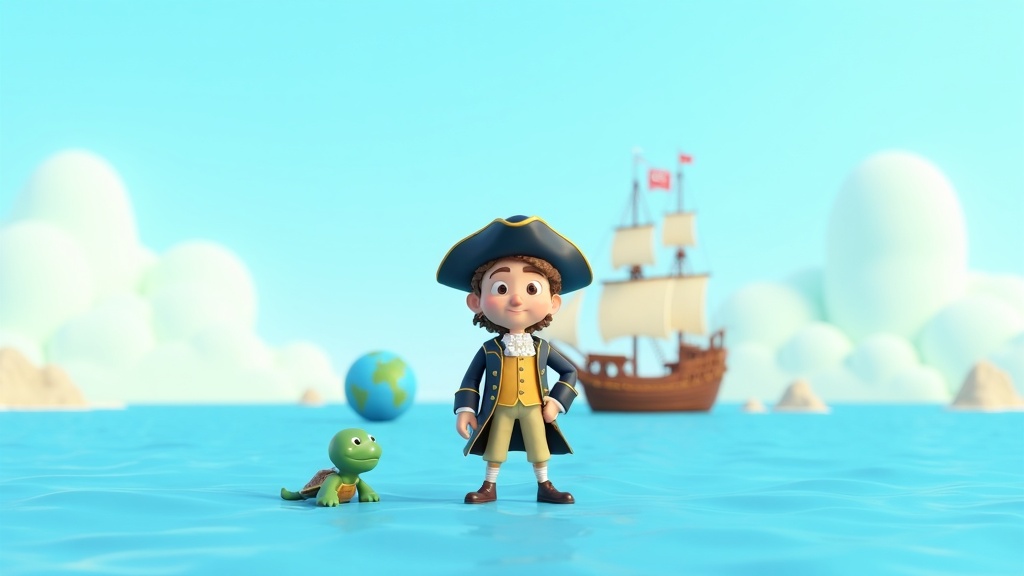
Mira says:
"Wow, Finn! The *Santa Maria* was the biggest, but even she was tiny compared to today's boats! Imagine being stuck on that little ship for weeks—it makes building a tall Lego tower look easy!"
What Were the Nina, Pinta, and Santa Maria?
The three ships weren't all the same size or shape! They were common types of ships sailors used in Spain during the late 1400s. The Santa Maria was the biggest and was the flagship - that means it was Columbus's main boat!
The Niña and the Pinta were a different, sleeker kind of ship called a caravel. Caravels were known for being faster and better at sailing into the wind because of their special triangular sails, called lateen sails. The Santa Maria was a nao, or carrack, which was heavier and slower but could carry much more cargo and supplies for the long trip.
Mind-Blowing Fact!
Did you know that the names we use are actually nicknames? The Niña's real name was Santa Clara, and the Pinta's real name is actually unknown - 'Pinta' means 'The Painted One'! The Santa Maria was the only one whose name didn't change!
How Big Were They Really? Ship Stats!
When you hear 'ship,' you might think of something huge! But for kids learning history, it’s important to know these ships were small. They weren't built for comfort; they were built for exploration!
The Santa Maria, the largest, was about 18 meters (about 58 feet) long on deck. That’s only a little longer than a school bus! The Niña and Pinta were even smaller, around 15 to 17 meters (about 50 to 56 feet) long. They were basically floating wooden boxes carrying everyone across the Atlantic Ocean!
(Burden)
(About 58 feet)
(Estimated Burden)
(Canary Islands to Bahamas)
How Did These Ships Survive the Long Trip?
Sailing across the massive Atlantic Ocean in 1492 was super risky! The ships had to battle strong winds, huge waves, and sometimes, they didn't know where they were going next. The sailors relied on the sun, the stars, and special tools to keep them on course.
One of the best things about the smaller ships, the Niña and Pinta, was that they were caravels. This meant they were light and had sails that could catch the wind from different directions. This was super important for making progress across the water!
The Fates of the Three Vessels
Sadly, not all the ships made it back home easily. The Santa Maria met a sad end near the new lands. On Christmas Eve, 1492, the Santa Maria ran aground off the island of Hispaniola (which is now Haiti and the Dominican Republic) and had to be abandoned. Columbus used pieces of her to build a small fort!
What about the other two? The Pinta made it back to Spain, but after that, its history disappears - we don't know what happened to it next. The Niña, which Columbus loved so much, kept sailing! It was his favorite and even served as his flagship on later trips, surviving a huge hurricane. The last time we know about the Niña was around 1501.
💡 Did You Know?
Columbus’s first trip across the ocean took 71 days from Spain to the Bahamas! If you skip the stop in the Canary Islands, the actual ocean crossing was about 33 days - still a very long time to be bobbing on the waves for kids (and grown-ups) today!
🎯 Quick Quiz!
Which ship was Christopher Columbus's flagship, the largest of the three?
Who Were the Captains of These Boats?
It wasn't just the ships making history; it was the brave people steering them! Columbus was the Admiral, but each ship had its own captain.
The Santa Maria was captained by Columbus himself. The Pinta was sailed by Martín Alonso Pinzón, a very experienced sailor from a nearby town. His brother, Vicente Yáñez Pinzón, captained the beloved Niña!
- Santa Maria: The largest, a nao (cargo ship) type, captained by Columbus.
- Pinta: A fast caravel, captained by Martín Alonso Pinzón.
- Niña: The smallest caravel, captained by Vicente Yáñez Pinzón (Columbus’s favorite!).
These three ships - the Nina, Pinta, and Santa Maria - show us that you don't need the biggest, newest technology to make an incredible discovery. You just need brave people and a vessel tough enough to face the wild, wild sea! They are fantastic examples of history for kids to learn about courage and early exploration!
Questions Kids Ask About Explorers
Keep Exploring the Seas of History!
The voyage of the Nina, Pinta, and Santa Maria shows us that even the scariest journey can be tackled with teamwork and clever ships! Ready for the next adventure? Tune into our next episode to see what other amazing history explorers were up to!